Why Is Everyone Selling Asian Stocks?
Asia's two most important chipmakers reported record quarters, and their stock markets fell apart. Is it 1997 again?
The chain reaction
From US rates to your fund
Domino 1
US rates
The US 10-year Treasury yield climbs to its highest since 2002.
2:07 Ten trading daysDomino 2
Chip doubts
Samsung's record profit doesn't help: China's memory chips and doubts over AI spending weigh.
2:07 Ten trading daysDomino 3
Black Thursday
Korea's KOSPI loses 20.7% in seven trading days; trading is halted mid-day on October 15.
2:07 Ten trading daysDomino 4
Money leaves
Foreign investors pull $28.3 billion out of eight Asian stock markets in one week.
5:14 Where the money goesDomino 5
Currencies
The Taiwan dollar slides until the central bank puts out a rare statement.
6:33 Is it 1997 again?Domino 6
Your fund
In the biggest emerging-markets index funds, Taiwan and Korea are almost half of the money.
9:27 Where it reaches you
The story
What this episode explains
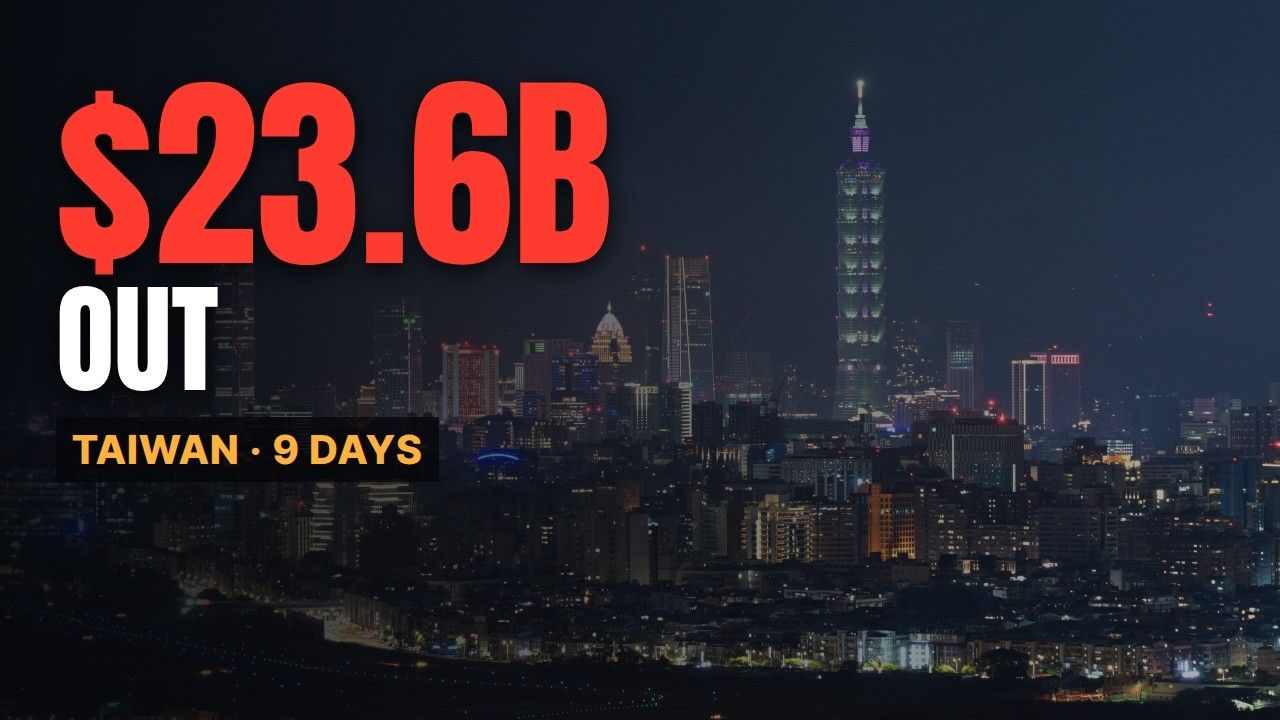
In October 2026, Asia's two most important chipmakers reported record quarters, and their stock markets fell apart. Korea's KOSPI lost 20.7% in seven trading days and trading was halted mid-day on October 15. Foreign investors sold Taiwan stocks for nine straight days, NT$758.5 billion (about US$23.6 billion), and the Taiwan dollar slid until the central bank put out a rare statement. In one week, foreign investors pulled $28.3 billion out of eight Asian stock markets. So, is it 1997 again?
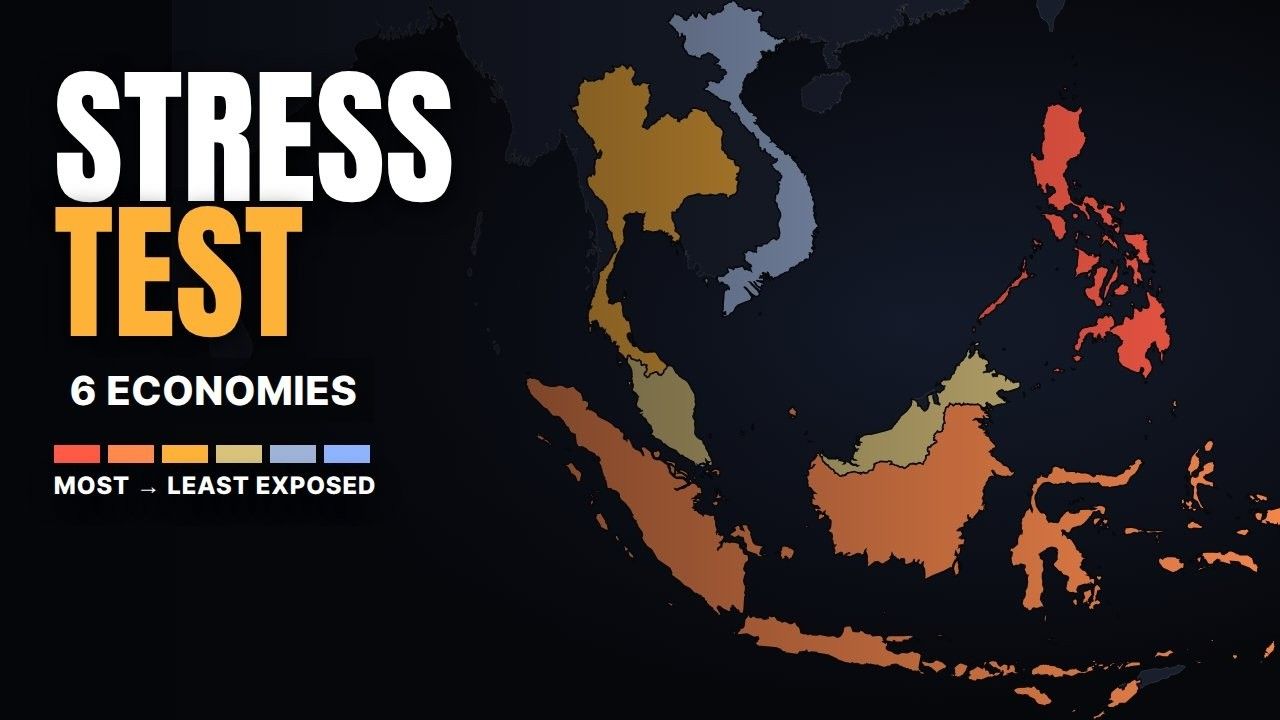
We follow the ten trading days, day by day: a US 10-year yield at its highest since 2002, Samsung's record profit that didn't help, China's memory chips, the doubts over AI spending, Black Thursday in Seoul, Jakarta's worst day since 1998, and Taiwan's ninth day. Then we pull every trading day of foreign flows in Taiwan since 2004, compare 1997–98 with now (reserves, currencies, and the clearest sign of all: the won), and show how much of a typical emerging-markets fund is Taiwan and Korea.
- −20.7%
- Korea's KOSPI in seven trading days
- $28.3B
- pulled from eight Asian stock markets in one week
- NT$758.5B
- ≈ US$23.6B sold by foreigners in Taiwan in nine straight days
Samsung Made Record Profits. Then Korea Crashed.
Read it instead
The full transcript
Read all 7 chapters
0:00Record profits, crashing markets
This October, Asia's two most important chipmakers reported the best quarters in their history. Samsung said its quarterly profit was almost nine times what it made a year earlier. TSMC earned more per share than ever before.
Then their stock markets fell apart. On Thursday, October the 15th, South Korea's market fell so fast that trading was stopped in the middle of the day. In seven trading days, Korea lost more than a fifth of its value.
In Taiwan, foreign investors sold a record 300 billion Taiwan dollars of stocks in a single day. They sold for nine trading days in a row. The Taiwan dollar slid to its weakest in a year and a half, and the central bank put out a rare statement to calm things down.
In one week, foreign investors pulled 28 billion dollars out of Asia's stock markets. Asia has seen money run like this before. In 1997, it took whole countries down with it.
So, is it 1997 again? Here are the 10 trading days that got us here, where the money went, and what's really breaking this time.
This is Dominomics. We take one big story and follow its chain reaction, all the way to your money.
1:14How high they climbed
First, how high these markets had climbed. At the start of this year, Korea's main index, the KOSPI, stood at about 4,200. By June, it had more than doubled, past 9,000. Shares of SK Hynix, the memory maker, had risen 17-fold in a year and a half. Taiwan's market rose 72 percent, to a record on October 6.
Both rallies rest on one thing: chips for artificial intelligence. Samsung and SK Hynix, two of the world's three big memory makers, are about half of Korea's entire stock market. In Taiwan, one company, TSMC, the factory behind Nvidia's chips, is about two-fifths.
That makes Seoul and Taipei the easiest places on Earth to buy the AI boom, and the easiest places to sell it. Foreign investors own almost half of Taiwan's stock market. And this year, they've been selling.
2:07Ten trading days
Monday, October 5. Korea's market was closed for a holiday. In New York, the yield on 10-year U.S. government bonds reached 5.35 percent, the highest since 2002.
That's what the world's safest borrower pays, and it sets the bar for everything else. With oil above a hundred dollars, American inflation was climbing again, and in September the Federal Reserve had raised interest rates. Suddenly, a safe 5% at home looked a lot better than a crowded bet abroad.
Tuesday, Taiwan closed at a record. But in Seoul, foreign funds started selling, just as Samsung finished buying back its own shares: 15 trillion won, its steadiest buyer. On Thursday, Samsung announced the biggest quarterly profit any Korean company has ever reported. 107 trillion won. About 80 billion dollars. The shares fell anyway.
The following Monday, the news came from China. CXMT, China's leading maker of memory chips, said it would launch a denser memory chip for servers by the end of the year. Elon Musk posted that China will be making a lot of RAM in 2028. In Seoul, investors started asking how long the memory boom could last. On Tuesday, Korea fell 5.5%, and foreigners sold 4.5 trillion won of Korean stocks, their biggest day of the month.
On Wednesday, the doubt reached the AI build-out itself. CoreWeave, which rents out computing power for AI, saw one of its bonds trade at a yield of about 15 percent, the kind of rate lenders charge when they're worried about getting paid back. Its shares fell 15 percent in a day. And at half-past nine that night, Seoul time, America's inflation figure came out: 3.7 percent.
Thursday, October the 15th. Korea opened into all of it. Samsung fell 9.5%. SK Hynix, 11. Just after half past 12, the circuit breaker stopped trading. Korea closed down 7.6%. In Taiwan that day, foreign investors sold 302 billion Taiwan dollars of stocks. The most ever in a single day.
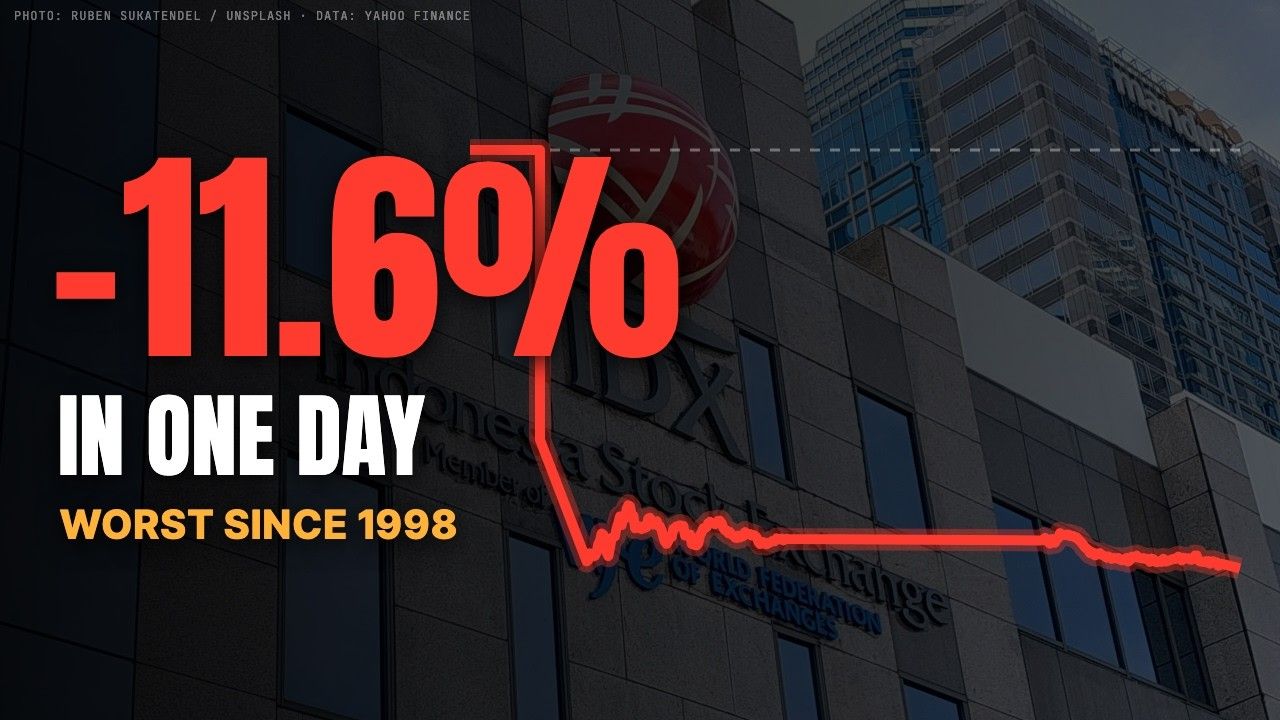
Friday, Jakarta had its worst day since 1998, after the index company MSCI proposed dropping Indonesia from its emerging markets. Oil touched $110. When the week was over, foreigners had pulled $28 billion out of eight Asian stock markets. $19 billion came out of Taiwan alone.
And on Monday, October the 19th, the ninth day. Korea bounced almost two percent. Taiwan didn't. Foreigners sold another 77 billion Taiwan dollars. The Taiwan dollar touched its weakest since April of last year.
That morning, Taiwan's central bank put out a statement. In one week, it said, foreign investors had taken almost 18 billion US dollars out of the country. It would make timely adjustments to keep the currency stable.
The same morning, in parliament, Taiwan's top financial regulator, Peng Jin-lung, was asked whether the government would step in. There's no distortion in the market, he said, so we won't. That's how much influence foreign investors have on Taiwan's stocks.
5:14Where the money goes
Here's how a stock sale becomes a currency problem. A foreign fund that sells Taiwanese shares is paid in Taiwan dollars. To take the money home, it has to sell those Taiwan dollars and buy US dollars. Billions of them, all at once, push the currency down. That's why the central bank spoke up.
We pulled every day of foreign trading on the Taiwan Stock Exchange since 2004. Nine days of selling added up to 758 billion Taiwan dollars, about 23.5 billion US dollars. The previous record for any nine days was set only this summer: 539 billion. And this year, foreigners have sold more than 2 trillion Taiwan dollars of Taiwanese stocks, the most since the records begin, and more than three times as much as in all of last year.
Someone has to buy what foreigners sell. In Taiwan, over those nine days, ordinary investors and other local buyers bought more than 900 billion Taiwan dollars of stock. That's why Taiwan's index fell only 6%. In Korea, while foreigners sold about 18 trillion won of stocks in October, Korean retail investors bought more than 6 trillion. Many of them borrowed to do it. On the day of the crash, brokers' forced sales of investors who couldn't cover their loans were 14 times higher than a week earlier.
6:33Is it 1997 again?
Which brings us back to the question. To answer it, you have to know what 1997 actually was.
It began in Thailand. For years, Thai banks and companies had borrowed U.S. dollars, short-term, to fund a boom, while the baht was pinned to the dollar. In 1996, Thailand spent 8% of its whole economy more abroad than it earned. When investors lost faith, the central bank burned through its reserves defending the peg. On July 2, 1997, it gave up. Within four months, the baht had lost more than a third of its value.
Then the dominoes. On Friday, October the 17th, 1997, Taiwan stopped defending its own currency, 29 years ago this month. Speculators turned on Hong Kong, and its stock market lost about a quarter in four days. On October the 27th, Wall Street fell 7%, and the New York Stock Exchange used its circuit breaker for the first time.
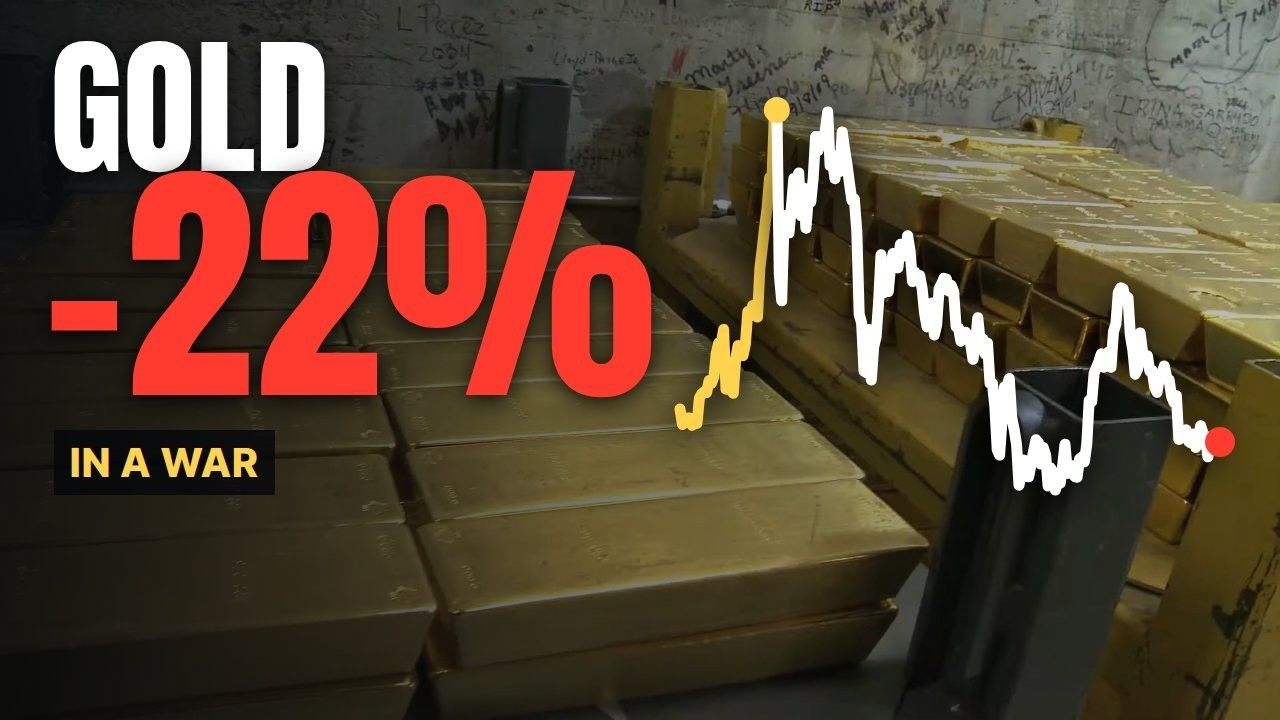
Korea was next. Its companies had borrowed in dollars too, and by mid-December the government had only about $4 billion it could actually use. The IMF led a rescue of about $57 billion. The won lost half its value. The KOSPI fell below 300. And millions of Koreans lined up to hand over their gold, more than 200 tonnes of it, to help the country pay.
In Indonesia, the rupiah lost more than 80%, and the crisis ended President Suharto's rule after more than 30 years. Taiwan came through best: its companies hadn't borrowed abroad, and its currency bent instead of breaking. Even so, Taiwan's stock market fell by almost half.
Now, compare. At the end of 1997, Korea's reserves were about $20 billion. Today, $440 billion. Taiwan's have gone from under $90 billion to 600 billion. In 1997, the countries that fell spent more abroad than they earned. Now Taiwan and Korea earn far more abroad than they spend. And their currencies float.
Here's the clearest sign. In 1997, Korea's stocks and its currency collapsed together. This month, while Korea's stock market lost a fifth of its value, the won got stronger. On October the 19th, it closed at its strongest in two years.
So, is it 1997 again? No. Not the kind of crisis that bankrupts countries. In 1997, what broke was borrowed money: dollar debts that couldn't be repaid. This time, nobody is defaulting. What's breaking is a price: what the world was willing to pay for the memory chips that AI runs on.
But Taiwan's central bank's own numbers show a newer kind of risk. Foreigners hold Taiwanese stocks, bonds, and deposits worth almost 2 trillion U.S. dollars, more than three times Taiwan's reserves. They don't need to default to leave. They only need to sell.
9:27Where it reaches you
And this doesn't stay in Asia. In the biggest emerging-markets index funds, Taiwan and Korea are almost half of the money. Three chipmakers, TSMC, Samsung and SK Hynix, are more than a quarter on their own: more than all of China. If you own one of those funds, you own a piece of this.
Wall Street, meanwhile, has barely flinched. On October the 19th, the S&P 500 closed less than 2% below its record. The selling isn't aimed at America. It's aimed at the markets where the AI boom is most concentrated.
10:03What to watch
Three things to watch. Wednesday, October the 28th: the Federal Reserve decides on interest rates. The next day, SK Hynix reports its results, with Samsung's full results due around the same time: listen for what they say about memory prices next year. And every afternoon in Taipei: whether foreign selling stops, and where the Taiwan dollar settles.
In 1997, Asia learned not to borrow in dollars, and it never forgot. This time, the risk isn't a debt anyone owes. It's a bet almost everyone owns: that two whole stock markets can ride on one kind of chip.
Tell me in the comments: is this a correction, or the end of the chip boom?
This is Dominomics. I'll see you at the next domino.
Sources & notes
Where the numbers come from
Sources
- Taiwan Stock Exchange (three-institutional-investor data, every trading day since 2004; market values)
- Central Bank of the Republic of China (Taiwan): press release No. 166 (Oct 19, 2026), Taipei FX daily closes, foreign-held assets and reserves
- Financial Supervisory Commission (via CNA, Economic Daily News)
- Korea Exchange (closes, investor flows via Naver; circuit breakers via Yonhap)
- KOFIA
- Samsung Electronics Q3 2026 earnings guidance (Oct 8)
- TSMC Q3 2026 results (Oct 15)
- US BLS CPI (Oct 14)
- Federal Reserve
- CNBC (US Treasury yields)
- MBSB Investment Bank weekly fund-flow report via Bernama (Oct 19)
- iShares holdings files (EEM, IEMG, Oct 16)
- Yahoo Finance (index and share prices)
- BIS daily exchange rates
- World Bank WDI
- IMF (1997 Thailand news brief; Korea's 1997 arrangement)
- US SEC report on the Oct 27, 1997 market break
- HKMA
- Hankyung, Newspim, Hankook Ilbo, Maeil, Korea Herald, JoongAng, Christian Science Monitor (1997 timeline)
- Map: Natural Earth. Our own calculations: 9-day and single-day rankings of foreign net selling in Taiwan (records in NT$ and US$; relative to market value, March 2020 was larger), weights of TSMC, Samsung and SK Hynix in their markets, fund weights, 1997 vs 2026 currency and stock moves.
Please note
For education and entertainment only. Not financial advice: we don't recommend buying or selling any security. Market data as of October 16–19, 2026. The narration is an AI voice.
Spotted a mistake?
Tell us at business@dominomicsofficial.com. Corrections are logged on our corrections page.
Images, footage and data credits
Charts drawn by Dominomics from TWSE, KRX, KOFIA, Taiwan's central bank, CNBC, BIS, World Bank, iShares and Yahoo Finance data · Map: Natural Earth. Photos and footage (cropped/resized/graded; free licences):
- 4300streetcar / CC BY 4.0 (3 photos, 2025–2026: Taipei, TSMC Fab 18, SK hynix module)
- Achabonn / CC BY 4.0 (1 photo, 2024)
- Office of the President, Republic of China (Taiwan) / CC BY 2.0 (1 photo, 2021)
- Jiang / public domain (1 photo, 2007)
- Financial Supervisory Commission (Taiwan) / Government Website Open Information Announcement (1 photo, 2024)
- Narubaru7 / CC BY 4.0 (1 photo, 2025)
- S h y numis / CC BY 4.0 (1 photo, 2024)
- The White House (Adam Schultz) / public domain (1 photo, 2022)
- Oskar Alexanderson / CC BY-SA 2.0 (1 photo, 2009)
- Padgriffin / CC BY 4.0 (1 photo, 2026)
- National Archives of Korea / KOGL Type 1 (1 photo, 1998)
- Supanut Arunoprayote / CC BY 4.0 (1 photo, 2021)
- Marek Ślusarczyk / CC BY 3.0 (1 photo, 2013)
- Federal Reserve / public domain (1 photo, 2011)
- Secretariat General of the DPR (Indonesia) / public domain (1 photo, 1998)
- Ruben Sukatendel / Unsplash (1 photo, 2022)
- Pexels videos: Khan Ishaan, Alex Grant, Rafael Minguet Delgado, Esteban Maritorena, Steve B, MrColo, Tima Miroshnichenko
The next domino
Keep following the chain
Don't miss the next one
Get the next chain reaction in your inbox.