How Long Can Singapore's AI Boom Last?
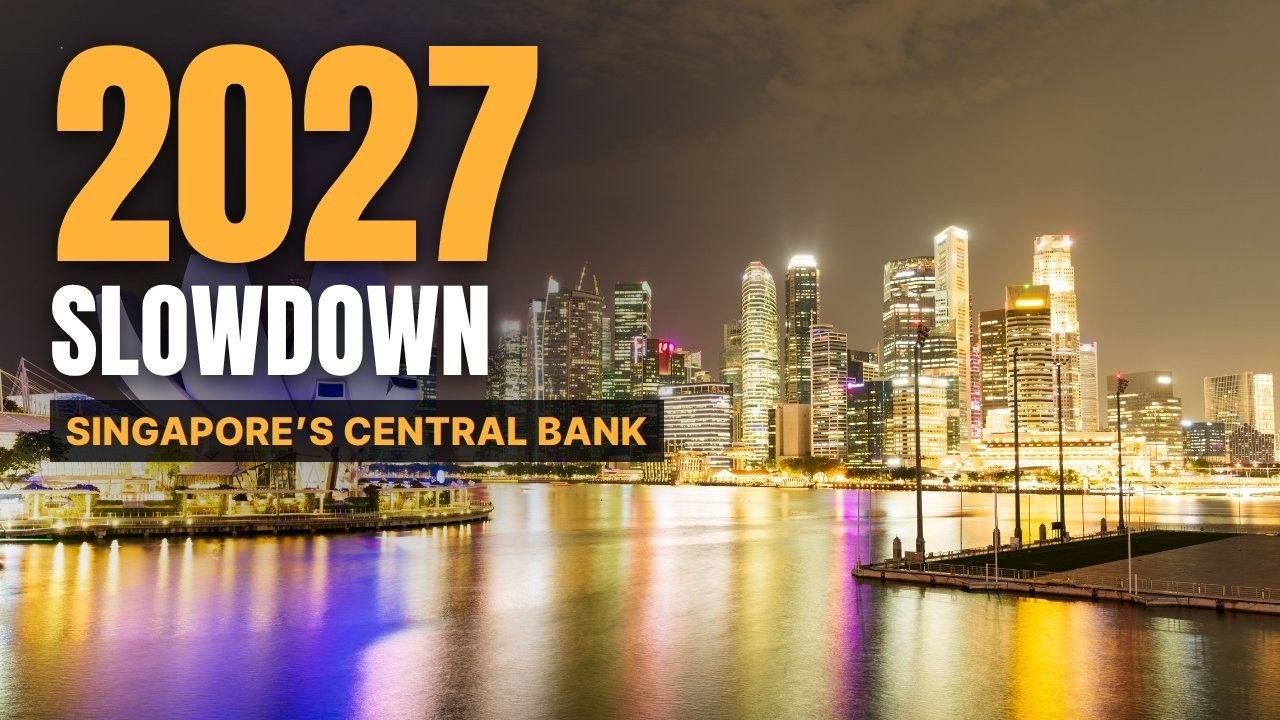
Singapore's economy is riding the AI boom, and its central bank expects AI-related activity to moderate in the latter half of 2027. We followed the chain from America's data centres to Singapore's factories, measured every electronics boom since 1983, and traced where it reaches jobs, pay and money.
The chain reaction
From data centres to your money
Domino 1
Data centres
Microsoft, Alphabet, Amazon, Meta and Oracle are on track to spend about US$800 billion on AI this year, by Goldman Sachs’ count.
1:44 Where the money comes fromDomino 2
Chips & machines
Singapore doesn't make AI processors or the memory stacked beside them, but it makes memory chips, servers and, by its own count, a fifth of the world's chipmaking equipment.
1:44 Where the money comes fromDomino 3
Factories
In the second quarter of 2026, Singapore's electronics output was 35% higher than a year earlier. Everything else its factories make, added together, was flat.
0:44 Thirty-five percentDomino 4
Growth
The economy grew 5.4% in the third quarter; Singapore's central bank puts technology's share of that growth at about three-quarters.
0:00 Three-quarters from techDomino 5
The date
MAS: “The pace of AI-related activity is then projected to moderate in the latter half of 2027.” Moderate, not end: the IMF sees Singapore's growth slowing from 5% this year to 3% next year.
3:11 The dateDomino 6
Your money
Since New Year the Singapore dollar has gained about 9% on the peso and the rupiah. S$1,000 (≈ US$781) was worth ₱45,856 on New Year’s Day and ₱49,934 on October 26.
6:32 Where it reaches you
The story
What this episode explains
Singapore's economy is riding the AI boom: it grew 5.4% in the third quarter of 2026, and its central bank says about three-quarters of that growth came from technology. The same central bank expects AI-related activity to moderate in the latter half of 2027, and Prime Minister Lawrence Wong said it plainly on October 8: "No boom is forever."
So how long can Singapore's AI boom last, what happens when it slows, and what would it mean for jobs, pay and money in Singapore and across the Causeway? We followed the chain from five American companies' data-centre spending to Singapore's chip plants, Penang and Johor, and measured every electronics boom Singapore has had since 1983. Our own analyses: Singapore's electronics cycle (EDB's index of electronics output, 12-month total: eight busts, how long booms lasted and how far output fell); the two speeds inside its factories (electronics +35% in Q2 2026, everything else flat); how exposed it is now compared with 2000; and the Singapore dollar against the region's currencies in 2026.
- ≈75%
- of Singapore's third-quarter growth came from technology-related sectors (MAS)
- 37 months
- the current electronics boom so far, +47% (our analysis of EDB data); since 2000 a boom has lasted under three years on average
- −25%
- Singapore's electronics output in the 2001 bust (12-month total, peak to trough)
Read it instead
The full transcript
Read all 9 chapters
0:00Three-quarters from tech
Singapore's economy is riding the AI boom. Its central bank says about three-quarters of its recent growth came from technology. So how long can that last?
The same central bank expects AI-related activity to slow in the second half of 2027. And on October the 8th, the prime minister said it plainly. No boom is forever.
So what happens when it slows, and what would it mean for jobs, pay, and money, in Singapore and across the Causeway? We measured every electronics boom Singapore has had since the 1980s, and how the past ones ended.
This is Dominomics. We take one big story and follow its chain reaction all the way to your money.
0:44Thirty-five percent
Start with the factories. In the second quarter of this year, Singapore's electronics output was 35% higher than a year before. Everything else its factories make, added together, was flat.
Exports tell the same story. In the first nine months of the year, Singapore's electronics exports nearly doubled in value, and chips made up almost half of the rise. Much of that is price. Memory chips have become far more expensive as AI data centres buy them up.
Factories are only about a sixth of Singapore's economy, yet in the second quarter they supplied about a third of its growth. Count the traders who ship those chips and the computer services around them too, and the central bank puts technology's share of third-quarter growth at about three quarters.
It came fast. The government raised its forecast for this year's growth in August to between 4.5% and 5.5%, up from 2% to 4%. It cited a strong first half and what it called the acceleration in global AI -related capital expenditure.
1:44Where the money comes from
Where does the demand come from? Much of it comes from five American companies racing to build data centres for AI. Microsoft, Alphabet, Amazon, Meta, and Oracle are on track to spend about $800 billion this year by Goldman Sachs' count.
Those data centres are full of servers. Servers need processors and memory, and chips need silicon wafers and the machines that make them. Singapore doesn't make the AI processors themselves or the special memory stacked beside them, but it makes much of what goes around them.
Micron makes memory chips in Woodlands. GlobalFoundries and UMC make chips in Woodlands and Pasir Ris. Servers were about a sixth of Singapore's electronics exports last year. And Singapore says it makes a fifth of the world's chipmaking equipment, much of it in American companies' factories. In September, its precision-engineering output, led by chip equipment, was up 31% on a year before.
Malaysia sits on the same chain. Its exports in September were up 54% on a year earlier, mostly on electronics, and Penang supplies more than 60% of the country's electronics exports. Johor, across the Causeway, now has the third-largest data-centre capacity in Asia -Pacific, after Tokyo and Singapore.
So the chain runs from the spending plans of a few American companies, through chip plants in Singapore and Penang and data centres in Johor to the growth of two economies.
3:11The date
Now the date. On October the 14th, the Monetary Authority of Singapore wrote, The pace of AI-related activity is then projected to moderate in the latter half of 2027.
moderate, not end. The central bank still expects technology to be the main driver of Singapore's growth next year. But growth slows. The IMF expects Singapore's economy to grow 5% this year and 3% next year, the sharpest slowdown it projects in Southeast Asia.
The spending itself is expected to keep rising, just less quickly. Goldman Sachs sees it growing by about half in 2027, then by about an eighth in 2028. And more and more of it is paid for with borrowed money. Bonds, private credit, and companies set up just to fund data centres.
That is where the central bank sees the sharper risk, though not an immediate one. If AI earns less than hoped, the tech giants cut spending, the debt behind the data centres is repriced, and projects across the supply chain are delayed. Its managing director, Chia Der Jiun, called the boom's sustainability one major uncertainty, and warned that a major retrenchment in AI investment could sharply weaken global growth.
The IMF reviewed 14 AI deals since 2023 in which AI firms fund one another. Behind them sit about $650 billion of debt.
Some cooling is already in the numbers. In September, Singapore's electronics output was up 6% on a year earlier, after 28% in August, and its chip output less than 2%. The central bank put a slowdown earlier in the quarter down to supply limits, not weaker demand.
The Prime Minister on October the 8th. No boom is forever. At some point there will be a correction. And we don't know when it will happen or how it will happen.
5:01Eight busts
Singapore has been here before. We took the official index of its electronics output back to 1983 and averaged it over 12 months at a time. By our count, its electronics factories have been through eight busts.
Since 2000, a boom has lasted under three years on average and lifted output by about 45%. Then output fell by about a sixth over about a year and a half.
The most painful came in 2001. At the start of that year, the government forecast growth of 5 to 7 percent. When the dot-com boom ended, Singapore's economy shrank instead. A year's electronics output fell by a quarter, and more than 25,000 workers were laid off over twice as many as the year before.
The financial crisis of 2009 and the slump after 2011 cut about as deep. The last three, around 2015, 2019, and 2023, were milder, 8 to 10 percent.
This boom began in August 2023. It has run 37 months and lifted output 47%. Since 2000, only one boom has lasted longer. That doesn't tell us when it ends. Since 2000, booms have lasted from under a year to almost six years.
And Singapore is exposed differently from 2001. Factories are now a sixth of the economy, not a quarter. But electronics is still more than two -fifths of what they make, and four-fifths of that is chips.
6:32Where it reaches you
So where does it reach you? Start with jobs. Singapore's unemployment rate is about 2%, and the boom has lifted output far more than jobs. Chip plants need many machines and relatively few people. Layoffs rose to about 4,600 in the second quarter. The most since 2020. Though most were in services.
Pay is rising. This month, Singapore's National Wages Council recommended raises of 6 to 8 percent for lower-wage workers, after an economy that did better than expected.
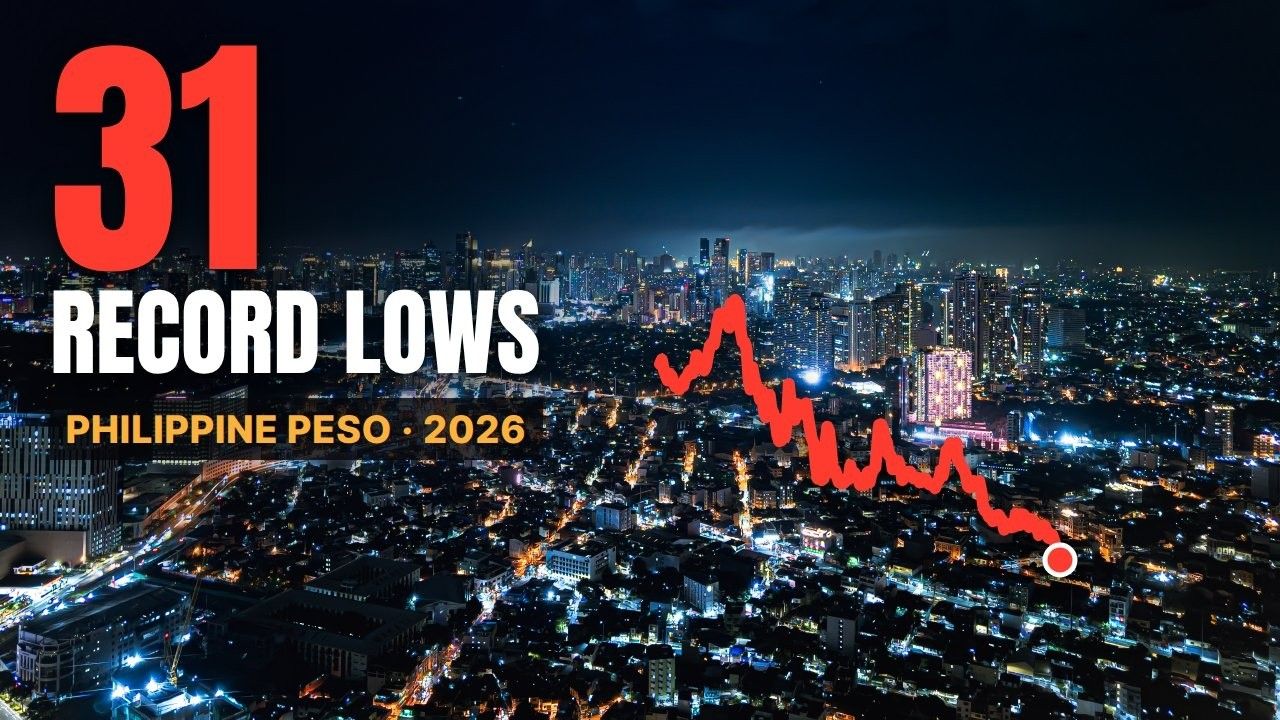
Then the Singapore dollar. Singapore's central bank steers its currency instead of interest rates, and this year it let it rise a little faster, twice, to hold down the cost of imports after oil jumped. Since New Year, the Singapore dollar has gained about 9% on the peso and the rupiah, 7 on the baht, and 6 on the rupee. A thousand Singapore dollars was worth about 45,900 pesos on New Year's Day. Now it's worth almost 50,000.
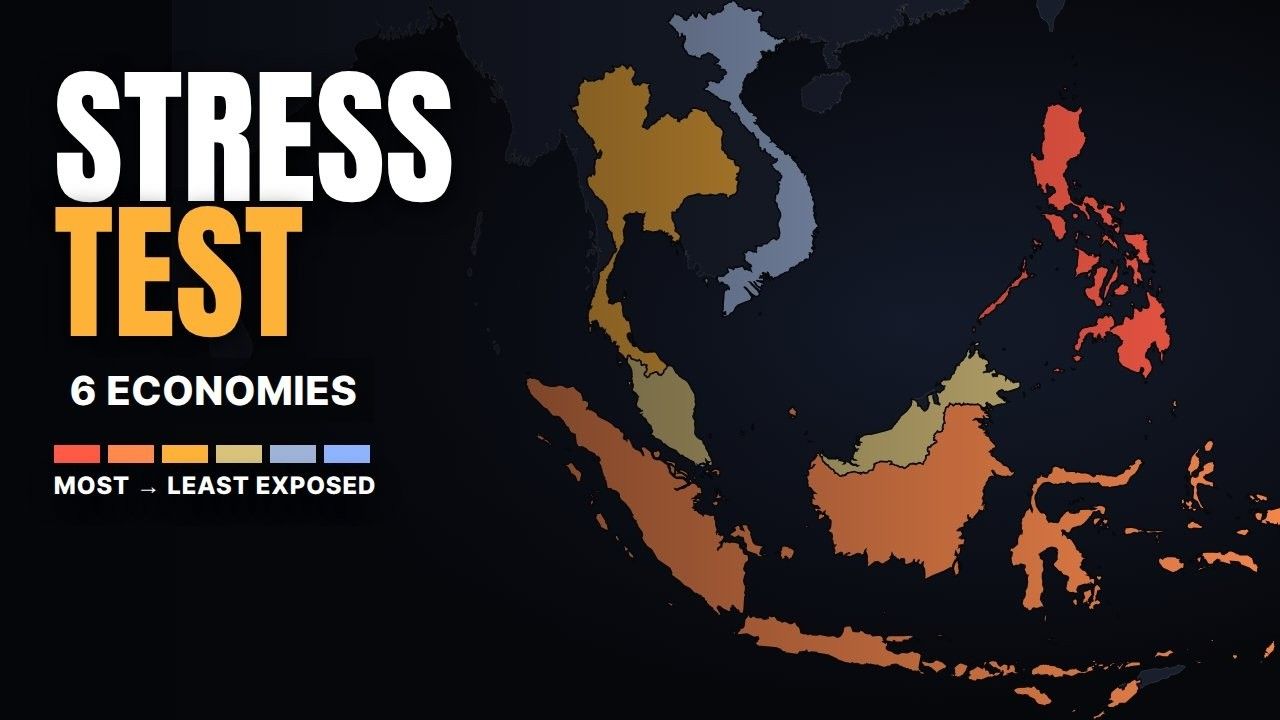
Against the ringgit, it is up only about 1%. But Malaysia is tied in more closely. More than a million Malaysians work in Singapore, and three to four hundred thousand cross the Causeway every day. Penang's chip plants and Johor's data centres ride the same cycle. The IMF expects Malaysia's growth to slow too, from 5.2% this year to 4.6 next.
7:55Why it might last longer
There is a case that this boom lasts longer than the old ones. Micron says more than three-quarters of its memory output for 2027 is already committed. The central bank hears that factories are still filling orders placed up to six months ago, and unlike the last chip cycle, stocks of unsold chips are lean.
New plants are coming. Micron's memory packaging plant from early 2027. A new chip foundry in Tampines the same year, and a huge new Micron memory fab in 2028. And official forecasts have been too gloomy before. Singapore expected 0–2% growth for 2025, back in April last year. It got 5.
8:37What to watch
The next dominoes are close. This week, SK hynix, Samsung, Microsoft, Alphabet and Amazon all report their results. Watch what they say about spending in 2027. In November, Singapore's government gives its first growth forecast for 2027. And every month come the electronics figures, output and exports.
8:58So, how long can it last?
So how long can Singapore's AI boom last? Its central bank expects it to slow from the second half of next year, still leading growth just more slowly.
History says booms here end, and the falls have run from about a twentieth to more than a quarter of a year's output. How much it reaches you depends on how this one ends. A gentle slowdown or a sharp turn like 2001.
Tell us in the comments, where are you watching from, and does your job depend on the AI boom?
This is Dominomics. See you at the next Domino.
Sources & notes
Where the numbers come from
Sources
- Monetary Authority of Singapore (monetary policy statements, 14 Apr, 27 Jul and 14 Oct 2026; Macroeconomic Review, Oct 2026, Jan 2026 and Jan 2002; Chia Der Jiun, 28 Jul 2026)
- Ministry of Trade and Industry, now the Ministry of Energy, Trade and Industry (GDP releases; Economic Survey of Singapore 2001)
- Singapore Department of Statistics (SingStat Table Builder)
- Economic Development Board (industrial production)
- Enterprise Singapore (NODX)
- Ministry of Manpower
- National Wages Council
- IMF (World Economic Outlook and Global Financial Stability Report, Oct 2026)
- ECB euro reference rates
- Department of Statistics Malaysia
- Penang state government
- Malaysia's Ministry of Human Resources
- Knight Frank
- Goldman Sachs
- Micron
- VIS and NXP (VSMC)
- CNA (PM Wong at the Forbes Global CEO Conference, 8 Oct 2026)
- Reuters
- Bernama
- The Straits Times
- New Straits Times
Please note
For educational purposes only. Not financial advice. Figures as of October 27, 2026. Forecasts are MAS's, the IMF's and others', not ours; our cycle analysis describes the past and doesn't say when this boom ends. Exchange rates are ECB mid-market reference rates; what a remittance service pays differs.
Spotted a mistake?
Tell us at business@dominomicsofficial.com. Corrections are logged on our corrections page.
The next domino
Keep following the chain
Don't miss the next one
Get the next chain reaction in your inbox.