Is AirAsia Running Out of Money?
AirAsia's planes were about 80% full, and it still lost RM9 million (≈ US$2.2 million) a day. Who pays if the cash runs out?
The chain reaction
From the war to passengers
Domino 1
The war
The Iran war pushes jet fuel to about twice what it cost in 2025.
1:05 Full planes, losing moneyDomino 2
No hedge
AirAsia had no fuel hedges. Singapore Airlines, Qantas and Ryanair did.
2:26 The bet it didn't makeDomino 3
Losses
RM830 million (≈ US$204 million) lost from April to June, with planes about 80% full.
1:05 Full planes, losing moneyDomino 4
The cash
Cash left against loans and bonds falling due, and a US$1 billion refinancing.
3:49 How much cash is leftDomino 5
The state
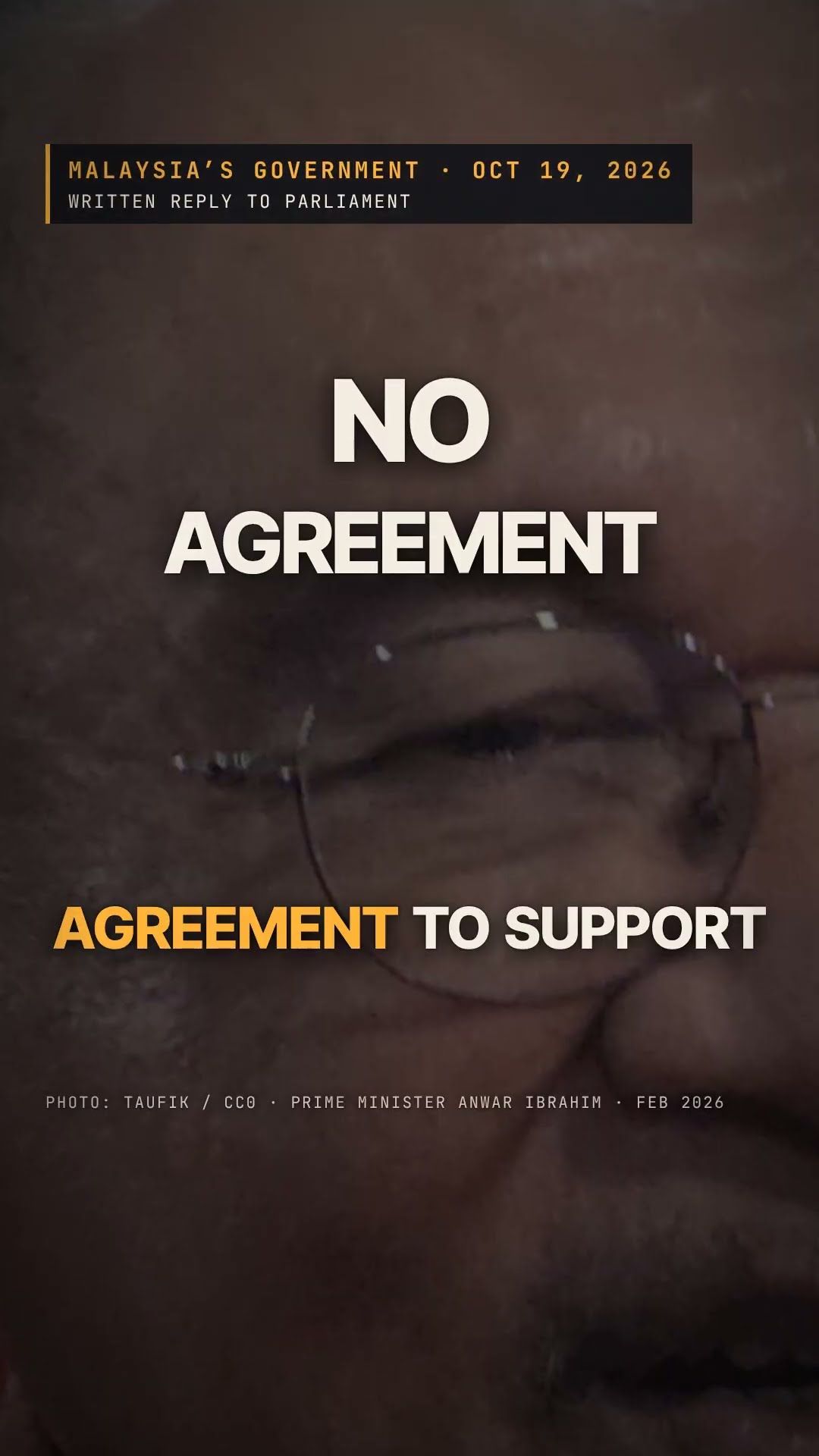
On October 19 the government said it has made no agreement to support AirAsia: no guarantees, no loans, no public money.
5:22 Will Malaysia save it?Domino 6
Passengers
Fares up by more than a fifth in May and June, and about RM2 billion (≈ US$490 million) prepaid for flights not yet flown.
8:02 Where it reaches you
The story
What this episode explains
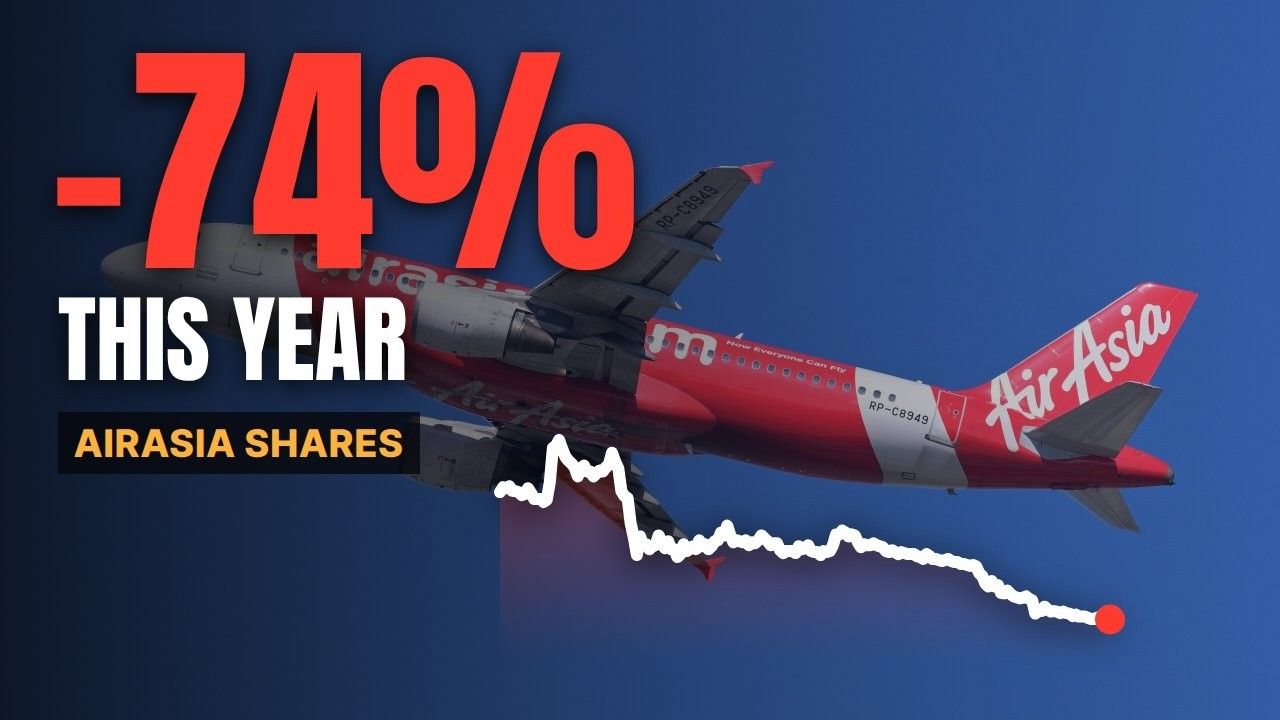
AirAsia's planes were about 80% full from April to June 2026, and its airlines still lost RM830 million (≈ US$204 million), about RM9 million (≈ US$2.2 million) a day. Its shares are down 74% this year, the worst of the 27 listed airlines we checked. On October 19, Malaysia's government told parliament it has so far made no agreement to support AirAsia: no guarantees, no loans, no public money.
So is AirAsia running out of money, and if it is, who pays? We follow the chain reaction: the Iran war and jet fuel at about twice last year's price, the fuel hedge AirAsia didn't have (while Singapore Airlines, Qantas and Ryanair did), how much cash is left against the loans and bonds falling due, the US$1 billion refinancing, what the government has and hasn't said, and what happened to Malaysia Airlines, Thai Airways, Garuda, Philippine Airlines and Jet Airways when they ran into trouble.
- 80%
- of seats filled, April to June 2026
- RM830M
- ≈ US$204M lost by its airlines in that quarter
- −74%
- AirAsia shares this year, the worst of 27 airlines we checked
AirAsia's Planes Were 80% Full. It Still Lost Money.
Read it instead
The full transcript
Read all 8 chapters
0:00Three quarters gone
For more than 20 years, one airline has sold Southeast Asia a promise. Now everyone can fly. In 2025, AirAsia carried almost 6 in 10 of Malaysia's domestic air passengers. In Sarawak, 7 in 10 of all air passengers.
This year its shares have lost three quarters of their value. In the three months to June, its airlines lost 830 million ringgit. That's about 9 million ringgit a day, while its planes were about 80% full.
On October the 19th, Malaysia's government told parliament that, so far, it had made no agreement to support AirAsia, whether in the form of guarantees, loans, or the injection of public funds. The next day, the shares fell to their lowest since 2022.
So is AirAsia running out of money? And if it is, who pays? The government, the passengers, or nobody? The answer starts with a bet AirAsia didn't make.
This is Dominomics. We take one big story and follow its chain reaction all the way to your money.
1:05Full planes, losing money
Start with the strangest part. Airlines usually lose money when their planes fly empty. AirAsia's didn't. In those three months, it filled four out of every five seats, and it still lost about 59 ringgit for every passenger it carried.
The problem is what each of those seats cost to fly. In the three months to June, AirAsia's airlines took in about 5.1 billion ringgit. The fuel bill alone was 2.8 billion. So out of every ringgit it took in, about 55 sen went into the fuel tank.
The reason is a war. The war with Iran began on February the 28th and choked the Strait of Hormuz and jet fuel, which is refined from crude, rose even faster than crude did. In the second quarter, AirAsia paid an average of $183 a barrel. That's 66% more than in the first quarter, and about twice what jet fuel cost in 2025.
AirAsia did what a budget airline can. It raised fares by more than a fifth in May and June, and added fuel surcharges. It cut a fifth to a quarter of its seats, parked about 30% of its fleet, and is handing 25 older planes back to their owners this year. Since the start of 2025, it has also sold six brand new ones. Management says that covered about 70% of the extra fuel cost. Not all of it.
2:26The bet it didn't make
Here's the bet. Many big airlines protect themselves from exactly this. They hedge. They lock in today the price of some of the fuel they'll burn next year. If oil spikes, the hedge pays out. If it falls, they overpay. It works like insurance.
Before the war, Qantas and Ryanair had locked in about 80% of the fuel they needed for the months ahead. Singapore Airlines. Almost half. Cathay Pacific. About 30%.
AirAsia had no fuel hedges. In April, its chief executive said it had been arranging some, but prices jumped before they were locked in. When fuel was cheap, going without kept its costs low. When the war came, the whole spike landed on it at once.
We compared 27 listed airlines around the world. Since the war began, American jet fuel prices are up almost 90%, and AirAsia's shares are down 77. This year, it's the worst of all 27. Singapore Airlines is up 3%, and Cathay Pacific 7.
Hedging isn't everything. Qantas and Ryanair still fell about a fifth. While India's IndiGo, which doesn't hedge either, is down only 8%. AirAsia had neither a hedge nor much of a cushion. The stock market now values the whole company at about 1.5 billion ringgit. That's less than it spent on fuel in those three months.
3:49How much cash is left
So how close is the edge? On June the 30th, AirAsia had 954 million ringgit in cash. Against it 3.1 billion ringgit of borrowings, 800 million of it due within a year, plus almost 400 million ringgit of bonds due within the same year. And on top of that, 13 billion ringgit owed on leases for its planes.
But a loss isn't the same as cash going out of the door. About 330 million ringgit of that quarter's loss came from exchange rates. Much of what AirAsia owes, including its plane leases, is in U.S. dollars. So when Asian currencies weaken, those debts grow in local money. And before interest, tax, and the cost of its planes, the airline still earned 442 million ringgit.
Cash is the tighter story. In the first half of the year, more cash went out of its day-to-day business than came in, about 580 million ringgit, before paying its plane leases. It got through by selling about a billion ringgit of new shares in January, and by borrowing more. In September, Fernandes said its cash had passed a billion ringgit.
Now AirAsia wants to raise up to a billion U.S. dollars from international lenders, plus 700 million ringgit from banks at home. About half would replace expensive loans. The rest is cash to keep running and to pay bills it has put off. Fernandes expects the deal to close between December and February.
And lenders only lend to an airline they think will still be flying, which brings in the government.
5:22Will Malaysia save it?
In September, Reuters reported that the finance ministry had hired aviation consultants to assess AirAsia's funding needs. Then it reported that the government had asked Malaysia Airlines and Batik Air whether they could absorb AirAsia's share of the domestic market, as scenario planning. On September 17, AirAsia's shares fell 21% in a day.
Fernandes called the report irresponsible. We do not need rescuing or bailouts whatsoever, he said. In October, he told Reuters he was 100% sure AirAsia could manage without state aid. And then, we will never say no to it.
The government's answer came on October the 19th in a written reply to Parliament. For now, it said, there was no agreement and no commitment, no guarantees, no loans, no public money. Any request would be judged on the national interest, fiscal sustainability, and the protection of public funds.
So the door isn't closed, but any rescue would land on a stretched budget. Malaysia expects to spend about 40 billion ringgit this year to keep fuel cheap against 15 billion in the budget. And it has paid to save an airline before.
6:32The region has done this before
Malaysia Airlines 2014. After losing two planes within five months, its majority owner the state fund Khazanah bought out the other shareholders, put in about 6 billion ringgit in all, moved the airline into a new company and cut about 6,000 jobs, almost a third of its staff.
Its neighbours found other ways. Thai Airways went into court-supervised rehabilitation in 2020 and only came out in 2025. Philippine Airlines used an American bankruptcy court and its owner put in $500 million. Garuda Indonesia halved almost $10 billion of debt in court and the state put in 7.5 trillion rupiah.
And then there's Jet Airways, in India. In 2019 it ran out of cash, and no rescue came. Its last flight took off on April the 17th. More than 20,000 people lost their jobs, and in 2024 India's Supreme Court ordered the airline liquidated.
Notice the pattern. Every airline that someone stepped in for is still flying, but each of them was its country's flag carrier. AirAsia isn't. It's a private budget airline, built to compete with them.
Still, Malaysia can't simply look away. In 2025, AirAsia carried 62% of air passengers in Sabah and 70% in Sarawak. Rivals would need time to take that over. And AirAsia says they couldn't do it at its fares. As Fernandes put it, you have to have our cost structure to offer our fares.
8:02Where it reaches you
For passengers, the chain reaction has already arrived. Fares up by more than a fifth in May and June. Fuel surcharges and a fifth to a quarter fewer seats. And there's a link most people never think about. At the end of June, passengers had already paid AirAsia about two billion ringgit for flights it hadn't flown yet. That's more than twice the cash it had. It's money an airline runs on, and it's why passengers have a stake in how this ends.
So, what to watch? Jet fuel. In mid-October, the world average was still about $190 a barrel. The billion-dollar deal, which Fernandes expects to close between December and February, AirAsia's results for the three months to September, and whether the government's answer changes, and on what conditions.
8:51So, is it running out of money?
So, is AirAsia running out of money?
Not today, at the end of June, it still had almost a billion ringgit in cash. And in September, Fernandes said it had more.
But it is running out of time.
About 1.2 billion ringgit of loans and bonds were due within a year, more than that cash. Cash has been going out faster than it comes in. It has to replace those loans while fuel is still expensive, and lenders want to know who stands behind it.
The real question isn't whether AirAsia can survive the war. It's who it will owe money to if it does. And whether that someone is you, the taxpayer.
Tell me in the comments. Should a government ever rescue a private airline?
This is Dominomics. I'll see you at the next domino.
Sources & notes
Where the numbers come from
Sources
- AirAsia Group Bhd 2Q 2026 results (Bursa Malaysia, Aug 13, 2026) as reported by The Edge, Bernama, Malay Mail, NST, The Star and Business Today
- Reuters (Sep 3, Sep 16, Oct 12, 2026; factbox on airline fuel hedges, Mar 12, 2026)
- Bloomberg (Sep 17, Sep 18, Oct 20, 2026)
- Malay Mail (Sep 18, 2026)
- Dewan Rakyat written reply (Oct 19, 2026) via Bernama and Bloomberg
- The Edge (Oct 19, 2026; MAHB 2025 passenger data)
- Malaysia Finance Ministry via Bernama and The Edge (fuel subsidies, Jul 2026)
- The Edge Malaysia Weekly (Sep 21–27, 2026; AirAsia's cash flow and balance sheet)
- IATA Jet Fuel Price Monitor
- FRED / US EIA (US Gulf Coast jet fuel, Brent)
- Yahoo Finance (share prices of 27 listed airlines)
- Phillip Securities (Singapore jet fuel, Jul 14, 2026)
- Khazanah / Gulf News / The Edge (Malaysia Airlines 2014)
- TTG Asia, Bangkok Post (Thai Airways)
- Jakarta Post, Tempo (Garuda)
- Bloomberg, Manila Bulletin (Philippine Airlines)
- Tribune India, Supreme Court of India (Jet Airways).
Please note
For education and entertainment only. Not financial advice. We don't predict whether AirAsia will be rescued or fail. Figures as of October 21, 2026. US$ conversions at RM4.08. The narration is an AI voice.
Spotted a mistake?
Tell us at business@dominomicsofficial.com. Corrections are logged on our corrections page.
Images, footage and data credits
Charts drawn by Dominomics from the sources above. Photos and footage (cropped, resized, graded; free licences):
- Tuan Vy Spotter / Pexels licence (AirAsia A321, 2026; AirAsia Taxiing, 2026)
- K (@kelly) / Pexels licence (Passengers Boarding, 2026)
- Emrul Kausar Emon / Pexels licence (Departure Hall, Suvarnabhumi Airport, Bangkok, 2025; Departure Board, Suvarnabhumi Airport, Bangkok, 2025)
- Top Tutoweb / Pexels licence (AirAsia Wing in Flight, 2024)
- Esteban M / Pexels licence (Oil Tanker at Anchor, 2020)
- Mohammed Alim / Pexels licence (Kuala Lumpur, 2025)
- Melvin Wong / Pexels licence (Empty Airport Terminal, 2020)
- Morio / CC BY-SA 4.0 (Flight Board, KLIA2, 2016)
- InterEdit88 / CC0 (Parliament of Malaysia, Kuala Lumpur, 2024)
- Travelpleb / CC0 (Bursa Malaysia, Kuala Lumpur, 2012)
- 4300streetcar / CC BY 4.0 (AirAsia A320, Taoyuan Airport, 2026; Malaysia Airlines A330, Taoyuan, 2026; Philippines AirAsia A320 Taking Off, Taoyuan, 2026)
- Joe Ambrogio / Pexels licence (Aircraft Refuelling, 2025)
- Jeffry Surianto / Pexels licence (AirAsia at the Gate, Thailand, 2023)
- Peggy Anke / Pexels licence (Malaysian Ringgit, 2020)
- World Travel & Tourism Council / CC BY 2.0 (Tony Fernandes, 2017)
- Taufik / CC0 (Prime Minister Anwar Ibrahim, 2026)
- Aeroprints.com / CC BY-SA 3.0 (Malaysia Airlines A380, London Heathrow, 2014)
- Charles from Port Chester, New York (Flickr) / CC BY 2.0 (Grounded Jet Airways 777, Amsterdam, 2019)
- NORTLAUKAU 26088 JP / CC0 (AirAsia Check-In, Naha Airport, Okinawa, 2026)
- Kenneth Surillo / Pexels licence (Airport Check-In Queue, 2025)
The next domino
Keep following the chain
Don't miss the next one
Get the next chain reaction in your inbox.