How the Iran War Could Pop the AI Bubble
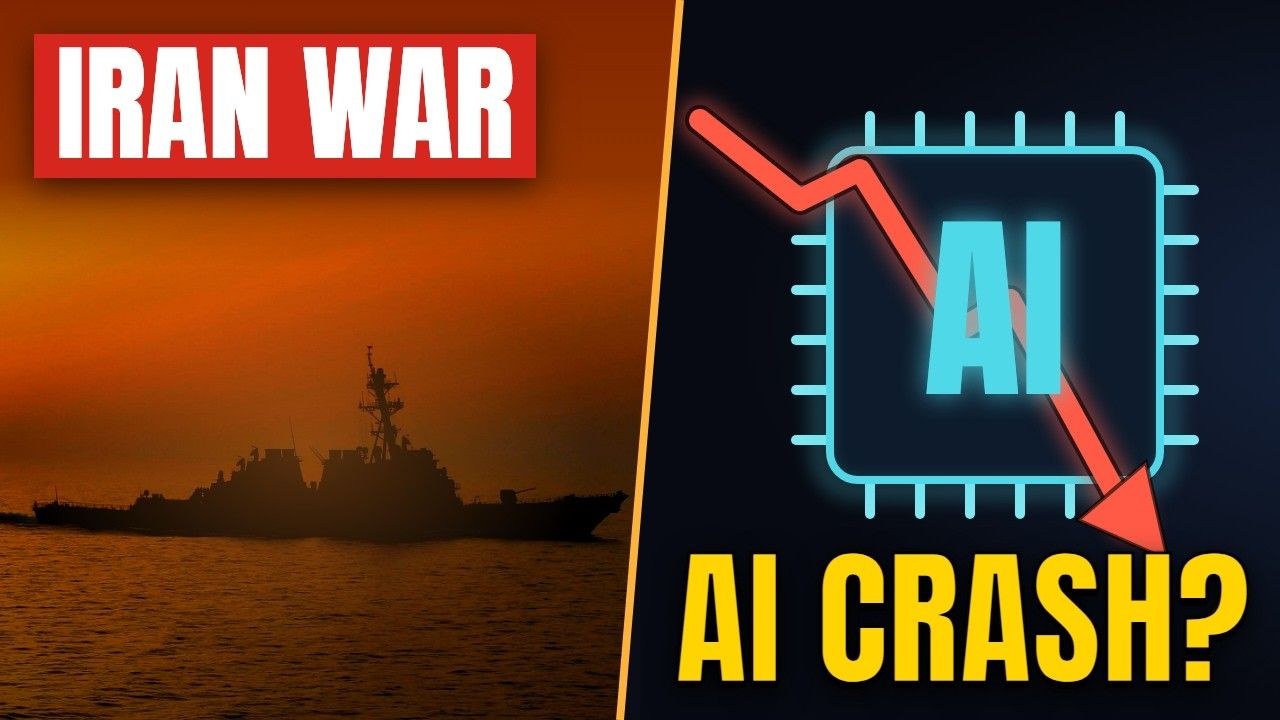
A 21-mile strait in the Middle East and a $27 billion data center in Louisiana look unrelated. They are dominoes.
The chain reaction
From the chokepoint to you
Domino 1
The chokepoint
The Iran war shuts the Strait of Hormuz, 21 miles wide at its tightest.
1:06 The chokepointDomino 2
Prices
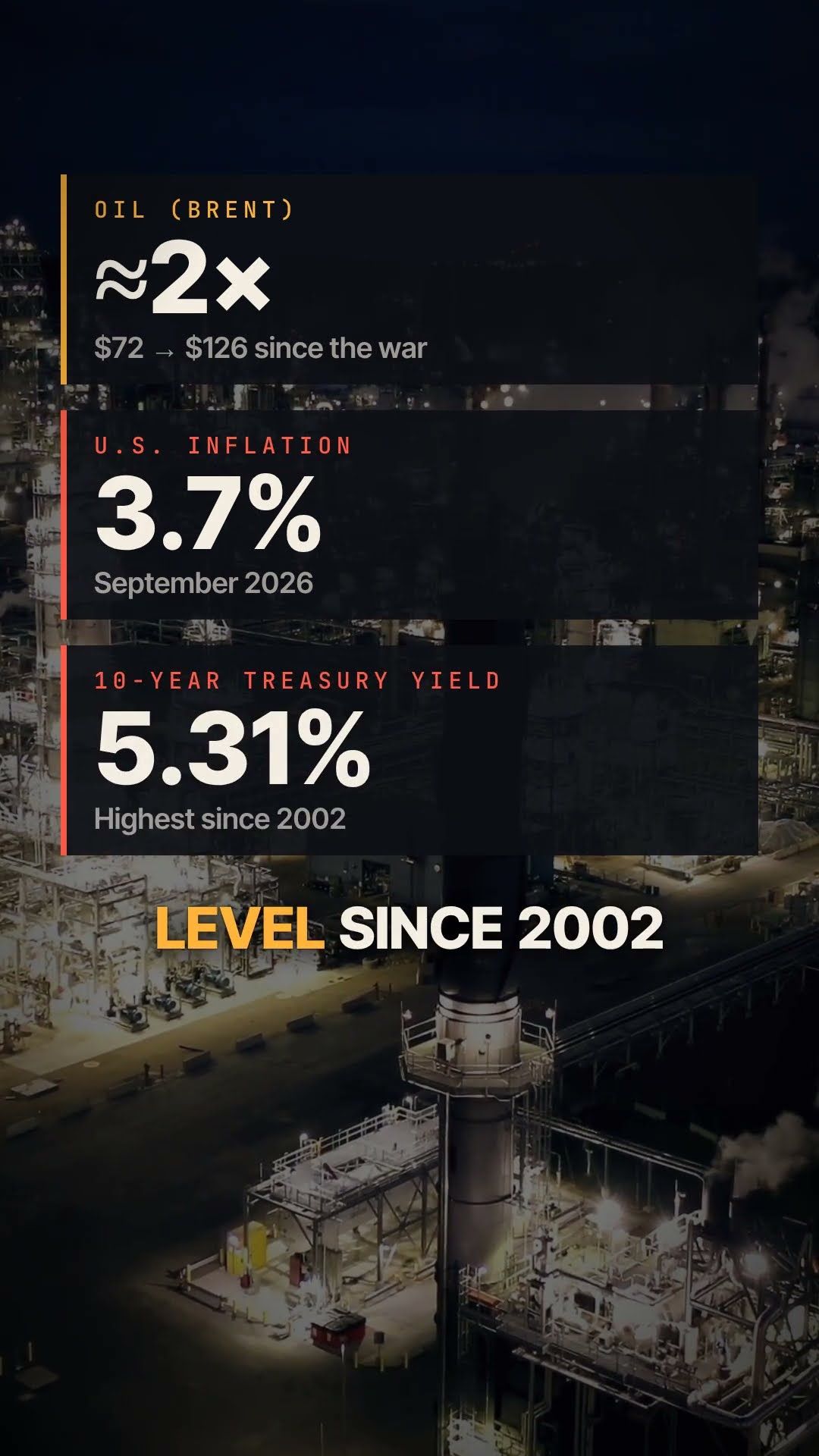
The oil shock reaches the price of everything. Inflation hits 3.7%.
2:34 The price of everythingDomino 3
Rates
The first Fed hike in three years, and the 10-year Treasury yield at a 24-year high.
3:50 The price of moneyDomino 4
The AI machine
An AI build-out paid for with debt, like a $27 billion data center in Louisiana.
5:12 The AI machineDomino 5
You
The 10 largest companies are nearly 40% of the S&P 500, and almost all are deep in the AI race.
7:51 You
The story
What this episode explains
The Iran war shut a 21-mile strait in the Middle East. A $27 billion data center in Louisiana looks unrelated. They're dominoes, and the first one has already fallen.
We follow the chain reaction link by link: the Strait of Hormuz → the oil shock → inflation at 3.7% → the first Fed hike in three years and a 24-year high in the 10-year Treasury yield → the debt-financed AI build-out → your index fund. Plus what happened the last time a debt-fuelled tech boom met rising rates, and the three dominoes to watch next (starting October 28).
- 21 miles
- the Strait of Hormuz at its tightest
- 3.7%
- inflation after the oil shock
- ~40%
- of the S&P 500 in its 10 largest companies
The Iran War Could Pop the AI Bubble. Here's How.
Read it instead
The full transcript
Read all 10 chapters
0:00The chain reaction
Right now, on a strip of water just 21 miles wide, almost nothing is moving. Before the war, around 85 ships sailed through it every single day. On October the 11th, two made it through.
7,000 miles away, in a field in rural Louisiana, crews are building one of the largest data centers on Earth. It's being paid for with $27 billion of borrowed money.
An oil shipping lane in the Middle East. A warehouse full of computers in the American South. They look completely unrelated. They're not. They're dominoes. And the first one has already fallen.
This is Dominomics. Every week we take one big story and follow its chain reaction, all the way to your money.
In the next few minutes we'll go domino by domino, from a closed strait, to the price of everything, to the interest rate on your mortgage, and finally to the biggest investment boom of our lifetime. Because if this chain keeps falling, the last domino isn't in the Persian Gulf, it's in your retirement account. Let's follow the chain.
1:06Domino 1 — The chokepoint
Domino One. The Chokepoint.
Look at a map of the Persian Gulf and you'll notice something strange. Saudi Arabia. Iraq. Kuwait. Qatar. The Emirates. Almost all of their oil leaves through a single narrow door. The Strait of Hormuz.
At its tightest point, it's 21 miles across. But the actual shipping lanes are only two miles wide in each direction. Before this year, roughly a quarter of all the oil traded by sea passed through that gap, along with a fifth of the world's liquefied natural gas.
On February 28, the United States and Israel launched strikes on Iran. Within days, Iran declared the strait closed to hostile shipping, insurers pulled their war risk coverage, and tanker traffic collapsed to almost nothing.
What followed was one of the wildest rides in the history of oil. Before the war, a barrel of Brent crude cost about $72. By early April, it hit 138. In June, a peace framework sent it crashing all the way back to 70. Then, in July, the ceasefire collapsed, and oil roared back above 130.
Today, more than seven months after the first strikes, the strait is still effectively shut. Ships are still being attacked, at least nine times in October alone. And the International Monetary Fund now assumes it won't fully reopen until March of next year.
That's the first domino. But oil is never just oil.
2:34Domino 2 — The price of everything
Domino 2. The Price of Everything.
Oil doesn't just fill your tank. It moves the trucks that stock your supermarket. The ships that carry your phone. The planes. The plastics. The fertilizer that grows your food. When the price of oil nearly doubles, it leaks into almost every price in the economy.
And that's exactly what's happening. On October the 14th, the U.S. government reported that consumer prices rose 3.7% over the past year, up from 3.4 the month before. Gasoline alone was responsible for half of the monthly jump.
Here's why that number made Wall Street nervous. In 1983, the economist James Hamilton noticed that almost every American recession since the Second World War had been preceded by a sharp spike in the price of oil. 1973. 1979. 1990. 2008. Again and again, the pattern repeats. Oil spikes. And then the economy stumbles.
But later research, co-written by a future chair of the Federal Reserve Ben Bernanke, pointed to something subtler. A big part of the damage doesn't come from the oil itself. It comes from how the central bank reacts to it.
3:50Domino 3 — The price of money
Which brings us to Domino 3.
Domino 3. The Price of Money.
The Federal Reserve has two jobs. Keep prices stable and keep people employed. An oil shock attacks both at once. Prices go up and growth slows down. There is no good move.
In September, the Fed chose to fight inflation. It raised interest rates for the first time in more than three years. Sixteen of its nineteen officials signalled they expect at least one more hike this year. And after that hot inflation report, traders now put the odds of another hike at the very next meeting, on October the 28th, at better than 50-50.
But the most important interest rate in the world isn't set by the Fed at all. It's set by the bond market. The 10-year Treasury yield, essentially the price America pays to borrow money for a decade, touched 5.31% this month. That's the highest level since 2002.
That one number quietly sets the price of almost every loan in the economy. It's why the average 30-year mortgage in America just hit 7.4%. And it's not only about oil. The U.S. government ran a $2 trillion deficit last year, and every one of those dollars has to be borrowed at these higher rates.
So money is getting more expensive for everyone. And that's a problem, because there's one corner of the economy that has been borrowing faster than almost anyone else.
5:12Domino 4 — The AI machine
Domino 4. The AI Machine.
For three years, the stock market has been powered by one story. Artificial intelligence. And building AI is staggeringly expensive. This year alone, Amazon, Microsoft, Alphabet and Meta are on track to spend more than $700 billion on chips, data centers and the power to run them. That's roughly $2 billion every single day.
Here's the part most people miss. For years, these companies paid for AI out of their enormous profits. Not anymore. The spending has grown so fast that cash flow alone can't keep up. So they've started borrowing.
According to S&P Global, the hyperscalers and their partners issued $225 billion of bonds in the first half of this year. That's more than 10 times as much as the same period a year earlier. And that's only the debt you can see.
Remember that data center in Louisiana? It's called Hyperion. To build it, Meta teamed up with an investment firm called Blue Owl and created a separate company. That company, not Meta, borrowed $27 billion. Meta simply rents the building. And the deal was structured so the debt stays off Meta's balance sheet.
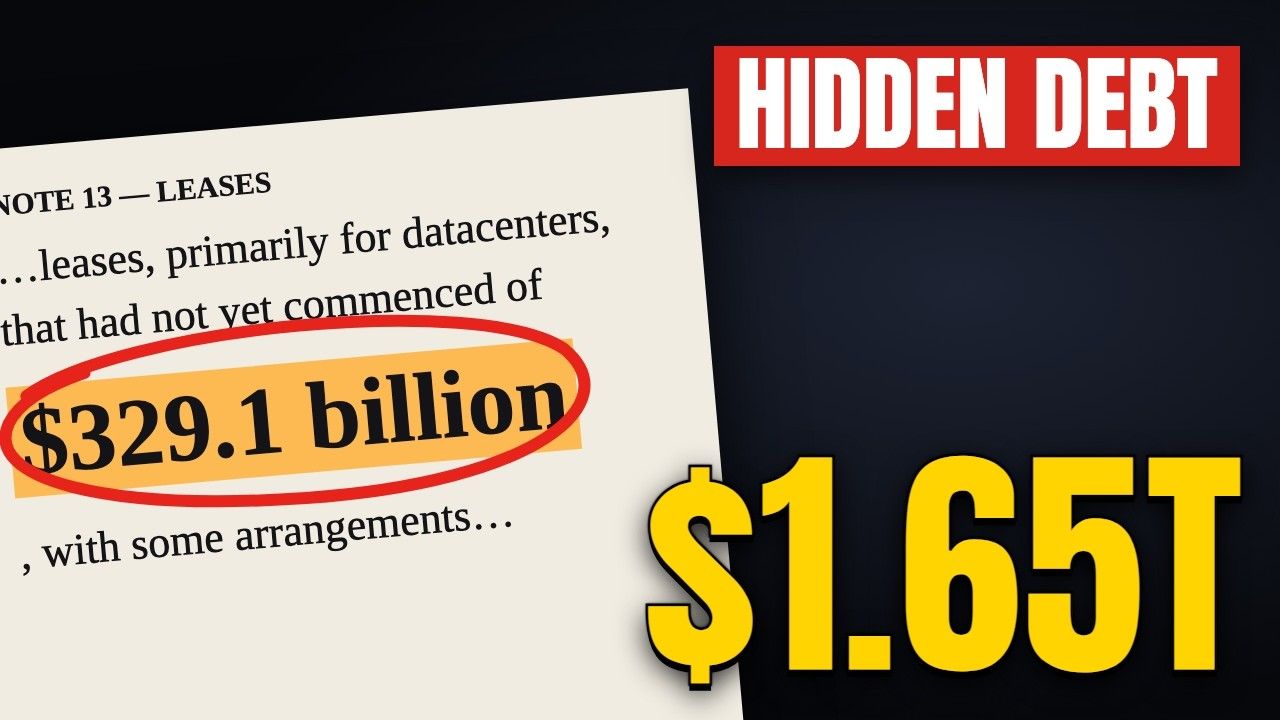
Meta isn't alone. Data center leases, long-term chip contracts, special purpose vehicles. A Nikkei analysis estimated that big American tech firms now carry about $1.65 trillion of these off-balance sheet obligations. That's more than the debt that actually appears on their balance sheets. The Bank for International Settlements has a name for it. Shadow borrowing.
Now borrowing isn't evil. Railroads, electricity, the internet. Every great infrastructure boom was built with debt. But debt changes the math. A data center is a bet that the revenue will arrive before the bills do. And when interest rates rise, the bills get bigger.
7:05The first cracks
This month, the first cracks appeared.
On October the 8th, the Financial Times reported that OpenAI's annualized revenue was about $20 billion lower than widely believed. The Nasdaq 100 had its worst day in seven weeks, and chip stocks dropped more than 3%.
Six days later, the hot inflation report landed, and the most indebted corners of AI got hit hardest. CoreWeave, a company that rents out AI computing power and has borrowed heavily to buy chips, fell more than 15% in a single day. The memory chip giant SK Hynix has fallen more than 30% since October 2.
When money is cheap, investors pay for dreams. When money gets expensive, they want cash flow, and they want it now.
7:51Domino 5 — You
Which brings us to the last domino, you.
Maybe you don't own any AI stocks. But if you own an index fund, through a 401k, a pension, or a retirement account, you're more exposed than you might think. The 10 largest companies now make up nearly 40% of the S&P 500, the highest concentration on record. Almost all of them are deep in the AI race.
And it goes beyond stocks. Earlier this year, business investment overtook consumer spending as the biggest driver of American economic growth. The IMF says AI investment is one of the main forces holding the world economy up against this energy shock.
So here's the scenario that keeps economists up at night. The oil shock pushes up inflation. Inflation pushes up interest rates. Higher rates squeeze the AI build-out. And if the AI build-out stalls, the economy loses its strongest engine at the exact moment it needs it most.
8:48We've seen this before
We've seen this movie before.
In the late 1990s, telecom companies were convinced that internet traffic was doubling every hundred days. So they borrowed billions to lay fiber -optic cable across continents and under oceans. Real traffic was growing fast, but nowhere near that fast.
Then the Fed raised rates, six times in a single year. The Nasdaq fell 78%. WorldCom and Global Crossing collapsed in two of the largest bankruptcies in American history. At one point, analysts estimated that less than 5% of Global Crossing's network was actually being used.
But here's the twist. The fiber didn't disappear. It was bought for pennies on the dollar, and it became the backbone of the modern internet. The cables that crashed the market in 2001 are part of the reason you can stream this video today.
The technology was real. The timing was wrong. And the debt turned a slowdown into a collapse. Bubbles don't pop because the technology is fake. They pop because the money runs out before the future arrives.
9:53Why the chain might hold — and what to watch
Now to be fair, dominoes only fall if they're standing close enough together, and there are real reasons this chain might hold.
The companies at the center of this boom are some of the most profitable businesses in history. Unlike the telecom startups of 2000, they can survive a bad year. AI demand is real. Millions of people and businesses pay for it every day. October's chip sell-off could turn out to be a healthy correction, not a collapse. And the strait could reopen sooner than expected.
So instead of predicting, let's watch. Here are the three dominoes to keep your eye on.
One. Ship traffic through Hormuz. If tankers start moving again, the whole chain loosens.
2. The 10-year Treasury yield. Above 5%, the pressure keeps building. Back below 4.5%, the AI borrowing math gets much easier.
And three, AI revenue versus AI spending. These companies are spending hundreds of billions of dollars. Sooner or later, customers have to pay enough to justify it.
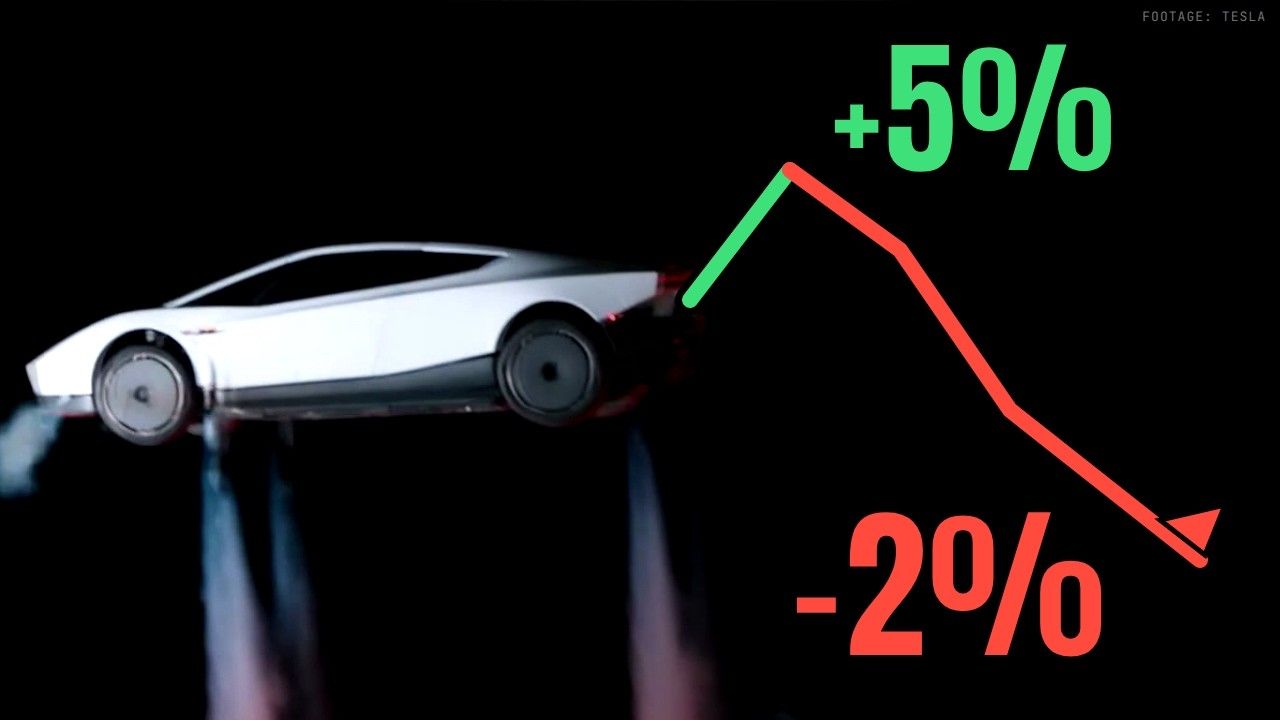
And mark this date: October the 28th. That afternoon, the Federal Reserve announces its decision on interest rates. A couple of hours later, Microsoft reports its earnings, and the whole market will be listening for one number, how much it plans to spend on AI. One day, two dominoes.
11:15The whole chain
The economy is a chain reaction. Most people only notice the last domino when it lands on their paycheck, their mortgage or their savings. On this channel, we follow the whole chain, from the first push to the final fall.
If that's the kind of thinking you want more of, subscribe. And tell me in the comments, which domino do you think falls next? This is Dominomics. I'll see you at the next domino.
Sources & notes
Where the numbers come from
Sources
- Market data: FRED (EIA, BLS, U.S. Treasury, Freddie Mac)
- Strait traffic: IMF PortWatch
- CPI: BLS
- Deficit: CBO
- Fed odds: CME FedWatch
- AI financing: S&P Global, Bloomberg, Financial Times, Nikkei, BIS
- History: Hamilton (1983, 2011); Bernanke, Gertler & Watson (1997); Odlyzko
Please note
For education and entertainment only. Not financial advice.
Spotted a mistake?
Tell us at business@dominomicsofficial.com. Corrections are logged on our corrections page.
Images, footage and data credits
- Satellite: contains modified Copernicus Sentinel data 2024 and 2026, processed by Dominomics
- Archive photos: U.S. Navy, U.S. Central Command, Federal Reserve, Architect of the Capitol, U.S. National Archives, Beinecke Library, Terence Chisholm (public domain, via Wikimedia Commons)
- "Diablo Dam power line construction work crew, circa 1935" by Seattle Municipal Archives and "Warning - Buried Fiber Optic Cable" by Tony Webster, both CC BY 2.0 (https://creativecommons.org/licenses/by/2.0/), cropped
- Stock video: Pexels, Mixkit
- Metaphor illustrations are AI-generated; every real place, event and year is real footage or imagery.
The next domino
Keep following the chain
Don't miss the next one
Get the next chain reaction in your inbox.