Asia's Best and Worst Currencies of 2026, So Far
Same war, same oil, same Fed. We ranked ten Asian currencies against the US dollar this year, from last place to first, and followed what it does to your money.
The chain reaction
From oil ▲ to your money
Domino 1
Oil ▲
Brent crude went from $61 a barrel at New Year to $115 on October 20. The Philippines, Thailand and India buy most of their oil abroad, and every barrel costs more of their own money.
1:29 A photo finish for lastDomino 2
Rates
America's central bank raised its rate in September, to 3.75–4%. Thailand's held at 1%, and money goes where it earns more.
3:24 Oil and interest ratesDomino 3
Trust
On October 15, MSCI proposed moving Indonesia out of its emerging-markets index. The next day Jakarta's stocks fell 11.6%, their worst day in nearly three decades.
1:29 A photo finish for lastDomino 4
Exports
Selling to the world pushed the other way: Korea's September exports hit a record $120.9 billion, half of it chips, and China's trade surplus reached $938 billion in nine months.
6:02 The top twoDomino 5
The table
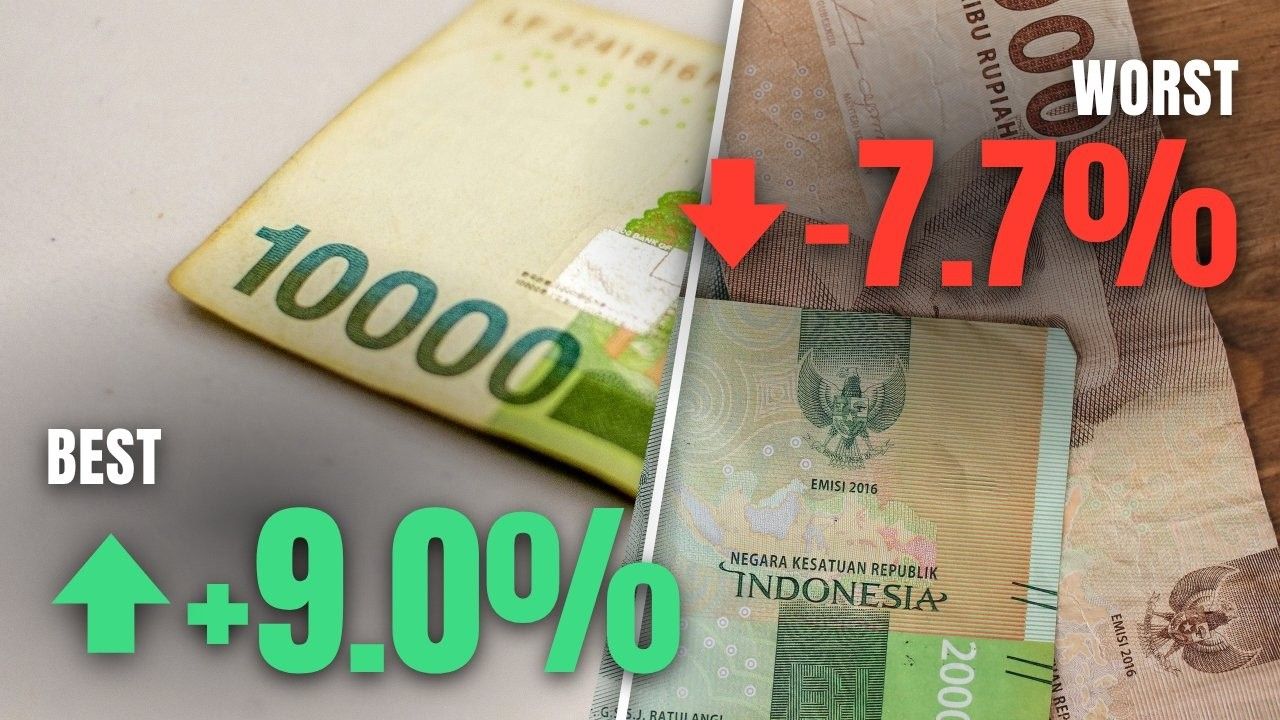
The won (+9.0%) and the yuan lead. The rupiah (−7.7%) and the peso (−7.4%) tie for last, with the baht and the rupee close behind.
0:50 The scoreboardDomino 6
Your money
US$1,000 of fuel, a phone or a flight now costs Filipinos about ₱4,700 (≈ US$74) more than in January. A US$500 remittance brings about ₱2,300 (≈ US$36) more, while prices rise 7.2% a year.
7:29 Where it reaches you
The story
What this episode explains
On October 23, 2026, the Philippine peso closed at its weakest ever, ₱63.615 to the US dollar, its 31st record low of the year. Indonesia's rupiah has fallen just as far. India's rupee and Thailand's baht are down 5–6%. But the Korean won is up 9%, and at the end of June it was at its weakest in 17 years.
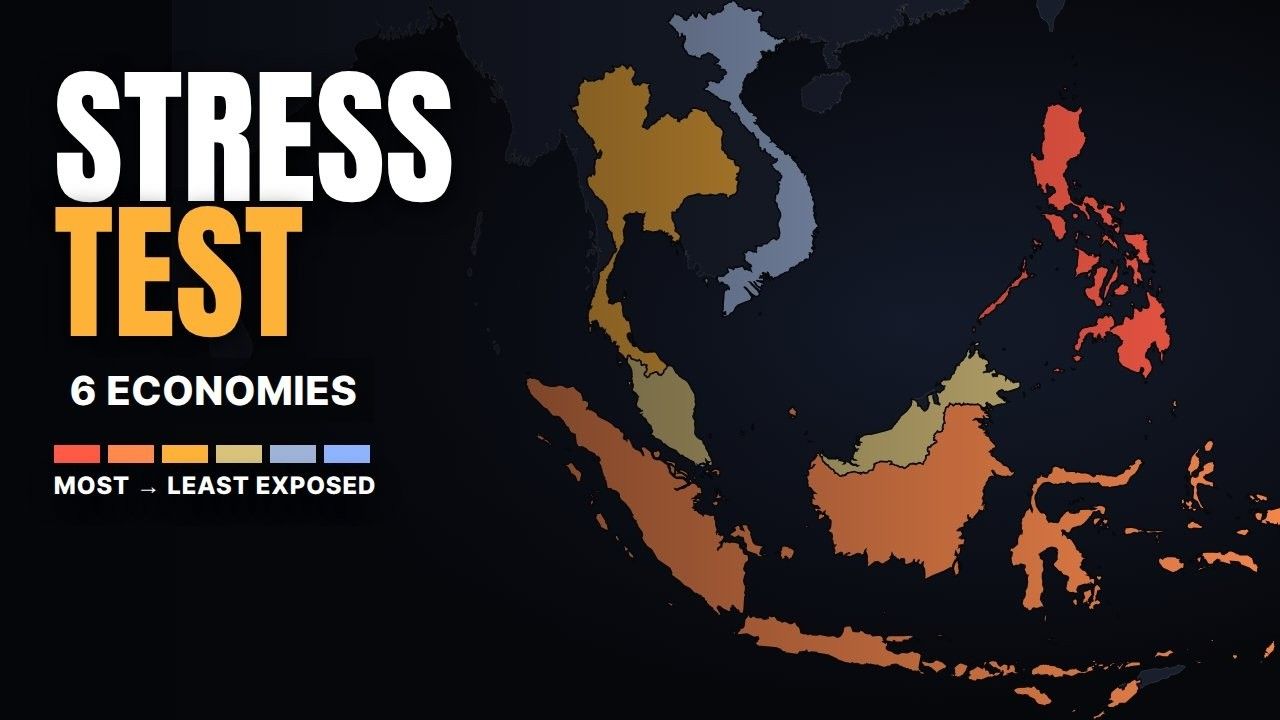
Same war, same oil, same Fed. So which of Asia's currencies are winning 2026 so far, which are losing, and what is it doing to your money? We ranked ten of them, from last place to first, with one official source for nine of them (the European Central Bank's daily reference rates). Our own analyses: the league table and the change since the war began; each currency's path this year; the won from its weakest since 2009 to +17.6%; what US$1,000 now costs in pesos, rupiah, rupees and baht; a US$500 remittance in pesos.
- +9.0%
- the Korean won this year, first of ten, after its weakest since 2009 in June
- −7.7%
- the Indonesian rupiah, tied for last with the Philippine peso (−7.4%)
- 31
- record lows for the peso this year, the latest ₱63.615 per US dollar on October 23
Read it instead
The full transcript
Read all 9 chapters
0:00Same war, same oil, same Fed
On Friday, October the 23rd, the Philippine peso closed at its weakest ever, 63.615 to the US dollar. It was the peso's 31st record low this year.
Indonesia's rupiah has fallen just as far this year. India's rupee and Thailand's baht are down 5-6%. But one Asian currency is up 9% and at the end of June it was at its weakest in 17 years.
Same war. Same oil price. Same American interest rates. So, ten months in, which of Asia's currencies are winning 2026, which ones are losing, and what is it doing to your money? We ranked ten of them from last place to first.
This is Dominomics. We take one big story and follow its chain reaction all the way to your money.
0:50The scoreboard
Here's the scoreboard. What each currency is worth in US dollars. From the last day of 2025 to October the 23rd. Nine of the ten come from one official source. The European Central Bank's daily reference rates. The Taiwan dollar, which the ECB doesn't track, comes from America's central bank.
Four forces split this table. What each country pays for oil. What it sells to the world. How its interest rates compare with America's. And how much investors trust it. Every currency here was pushed by at least one of them.
And the currency in first place is the one that looked like it was breaking this summer. But start at the bottom.
1:29A photo finish for last
Last place is a photo finish. By the European Central Bank's rates, the rupiah is down 7.7% this year, and the peso 7.4. On each country's own market rates, the gap shrinks, and on one measure the order even flips. Call it a tie.
Indonesia's problem is trust. The government expects this year's deficit to come close to its legal limit of 3% of the economy. A new finance minister took over in September. And on October the 15th, the index company MSCI proposed moving Indonesia out of its emerging-markets index. The next day, Jakarta's stock market fell 11.6%, its worst day in nearly three decades.
Foreign investors have pulled about $5 billion out of Indonesian stocks this year. Bank Indonesia has raised its interest rate by a full percentage point since May, to 5.75%, and it keeps stepping into the market to slow the fall.
The peso's problem is oil. The Philippines imports almost all of the oil it uses. Brent crude went from $61 a barrel at New Year to $115 on October 20. And every barrel costs more pesos. Since January diesel at the pump has gone up about 65 pesos a litre.
Prices are now rising 7.2% a year, while the economy grew just 2.3% in the second quarter. On October 22, the central bank raised its rate by half a point, to 5.5%. Its governor said, we're not hiking the policy rate to defend the peso.
But it has been selling dollars to slow the fall. In September, the country's reserves dropped below $100 billion for the first time in three years.
And here's the part that's easy to miss. Since the war began at the end of February, no currency on our list has fallen further than the peso: more than 9%. Before the war, it had been rising.
3:24Oil and interest rates
Number 8. The Thai baht. Down 6% this year and almost 8% since the war began. Thailand buys most of its oil abroad too, but its central bank went the other way. In February it cut its interest rate to 1%, and it has held it there.
America's central bank raised its rate in September to between 3.75 and 4 percent. So a dollar deposit pays several times what a baht deposit does, and money goes where it earns more.
Number 7. India's rupee down 5.4%. India buys more than four-fifths of its crude oil abroad. Between April and June alone, its crude oil bill hit a record of almost $50 billion.
India's reserves, which the central bank uses to slow the fall, dropped from a record $786 billion in early September to $721 billion by mid-October. On October 7, the Reserve Bank of India raised its interest rate for the first time since 2023.
4:25The middle of the table
Now the middle of the table where the surprises are. Number six. The Taiwan dollar down about 3%. Even though Taiwan makes the world's most advanced chips. In mid-October, as AI stocks sold off, foreign investors were net sellers of $19.4 billion of Taiwanese shares in a single week. And about $18 billion left the country.
Number 5. And second among the Southeast Asian currencies on our board, the Malaysian ringgit down less than 1% this year.
Malaysia has an oil bill too. Keeping petrol at RM1.99 a litre, and diesel subsidised too, is set to cost the government about 40 billion ringgit this year, more than double what it budgeted. But Malaysia sells more energy than it buys, thanks to its liquefied natural gas. When energy prices jump, so does what it earns.
Its exporters have been changing their dollars into ringgit. And the economy grew 5.5% in the first nine months of the year. Since the war began, the ringgit is still down almost 5%. But next to its neighbours, it held.
Number 4. The Japanese yen, almost exactly where it started the year. That took work. Between April 30 and May 6, Japan's government spent 11.7 trillion yen, about 74 billion dollars, buying yen.
Number 3. The Singapore dollar, up half a percent. The best of the Southeast Asian currencies on our board. Singapore's central bank steers the currency itself, not an interest rate, and a strong Singapore dollar is how it keeps imported prices in check.
6:02The top two
Number 2. China's yuan up 5%. China's exports are booming. A trade surplus of $938 billion in the first nine months. Already about four-fifths of last year's record. With three months still to go. Its central bank has let the yuan rise slowly.
And number one. The Korean won up 9% this year. At the end of June, it was at its weakest since 2009. Since then, it has gained almost 18% to its strongest in two years.
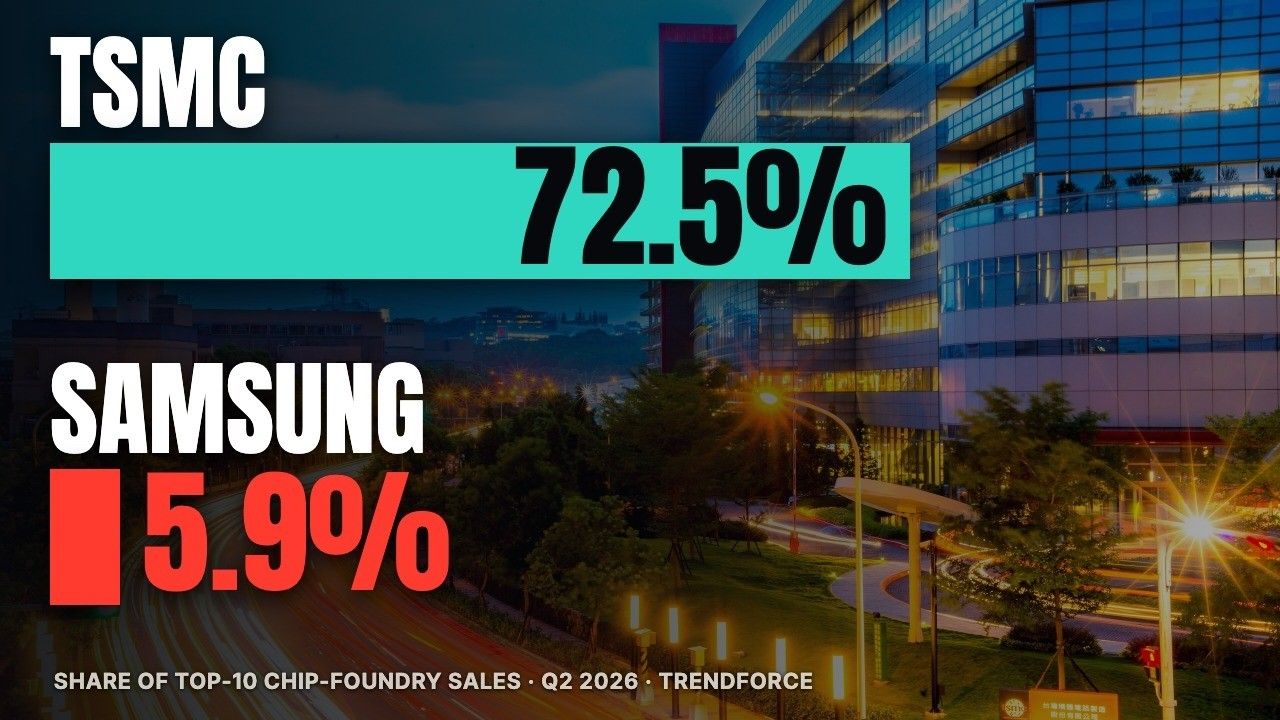
What turned it was chips. AI data centres need huge amounts of memory chips, and Korean companies make most of them. In September, Korea's exports hit a record $120.9 billion, and half of that was chips.
Here's the strange part. Foreign investors were selling Korean stocks for most of the year. But since the summer, exporters have brought in more dollars than investors took out. And when they changed those dollars into won, the won rose. The Bank of Korea raised its rate twice, too.
Line the table up, and a pattern appears. Near the top, big exporters, selling chips, gas, and factory goods. At the bottom, economies buying oil at war prices, with prices rising fast, or investors losing patience. The dollar itself barely moved. Against a broad basket of currencies, it's up just 1.4% this year.
7:29Where it reaches you
So where does it reach you? Start with anything priced in dollars. A thousand US dollars of fuel. A phone or a flight now costs Filipinos about 4,700 pesos more than in January. Indonesians about 1.4 million rupiah more. Indians about 5,000 rupees more. And Thais about 2,000 baht more.
And it doesn't stop at the border. A weaker currency makes fuel dearer, then transport, then food. Families paying for a child's school abroad, or for a trip, pay more too.
Some people win. A family receiving 500 US dollars from a relative working abroad. Now gets about 2,300 pesos more than in January, 8% more. But with prices rising 7.2% a year, that gain barely keeps up.
Exporters win, and so do visitors. For a Korean or a Singaporean, hotels and meals in Bangkok or Bali cost less than they did in January, even if the flights don't.
8:31Why it might turn
None of this is fixed, and currencies can turn fast. The won's climb rests on the AI chip boom, and chip stocks around the world have been falling this month.
The next dominoes are close. On October the 28th, America's central bank and Thailand's both decide on interest rates. Japan's follows on the 30th, and Malaysia's on November the 5th. And behind all of them is oil, still above $100 a barrel.
8:58So who's winning 2026?
So who's winning 2026 so far? The won and the yuan, and in Southeast Asia, the Singapore dollar and the ringgit. Who's losing? The rupiah and the peso, by a whisker, with the baht and the rupee close behind. Same war, same oil, same Fed. What decided it was what each country sells, what it buys, and how much the world trusts it.
Tell us in the comments. Where are you watching from? And what has your currency done to your money this year?
This is Dominomics. See you at the next domino.
Sources & notes
Where the numbers come from
Sources
- ECB euro reference rates
- Federal Reserve (H.10, FOMC statement 16 Sep 2026, broad dollar index)
- Bank Indonesia (JISDOR, BI-Rate)
- Bankers Association of the Philippines (via Philstar, BusinessWorld)
- Bangko Sentral ng Pilipinas
- Philippine Statistics Authority
- Department of Energy (via GMA)
- Bank of Thailand
- Reserve Bank of India
- PPAC (Ministry of Petroleum and Natural Gas)
- Central Bank of the Republic of China (Taiwan)
- Bank Negara Malaysia
- DOSM
- Japan Ministry of Finance
- Monetary Authority of Singapore
- China customs (via AP/Reuters)
- Bank of Korea
- Korea customs/MOTIE (via Yonhap)
- MSCI
- EIA via FRED
- Reuters
- The Star, NST
- JoongAng, SBS
Please note
For educational purposes only. Not financial advice. Figures as of October 23, 2026 (Taiwan dollar: October 16). A currency's change is its value in US dollars. Currencies can move quickly; rankings change with the date and the source.
Spotted a mistake?
Tell us at business@dominomicsofficial.com. Corrections are logged on our corrections page.
Images, footage and data credits
Charts by Dominomics from the sources above. Photos and footage (cropped, resized, graded; free licences):
- amanderson2 (Flickr) / CC BY 2.0 (Busan Port and Harbour Bridge, 2014)
- Seoul Tourism Organization (Seoul Tourism Archive) / KOGL Type 1 (Downtown Seoul from Inwangsan, 2023)
- Ajay Suresh (Flickr 55314069699) / CC BY 4.0 (MSCI HQ (7 World Trade Center), New York, 2026)
- Medelam / CC BY-SA 4.0 (Bank Indonesia, Jakarta, 2026)
- SJasminum / CC BY-SA 4.0 (Bangko Sentral ng Pilipinas, Manila, 2023)
- Reversemos.sapanaht / CC BY 4.0 (Bank of Thailand, Bangkok, 2022)
- Manukrishnan80 / CC BY-SA 3.0 (Bharat Petroleum Station, Mumbai, 2026)
- Sailko / CC BY 3.0 (Reserve Bank of India, Mumbai, 2019)
- 4300streetcar / CC BY 4.0 (Taipei 101, 2026)
- Ahmad Afif Isa (Flickr) / CC BY 2.0 (LNG Loading Jetty, Bintulu, Sarawak, 2012)
- Kaihsu Tai / CC BY-SA 3.0 (Bank Negara Malaysia, Kuala Lumpur, 2009)
- Mrb Rafi / CC BY-SA 4.0 (MAS Building, Singapore, 2023)
- 維基小霸王 / CC BY-SA 4.0 (People's Bank of China, Beijing, 2020)
- Raimond Spekking / CC BY-SA 4.0 (SK hynix Memory Chips on a Module, 2024)
- Wide Awake! / CC BY 4.0 (Remittance Office, Ayala Center Cebu, 2024)
- Pexels licence: Cos Walks, cottonbro studio, Esteban M, Zahid Nisar, Johan PamZ, Tima Miroshnichenko, LayG Traveller, Arunangshu Banerjee, aksinfo7 universe, Mohammed Alim, Timo Volz, Alex Grant, Airam Dato-on, Emrul Kausar Emon, Toàn BDS, Rafael Minguet Delgado, Angie Reyes, Defrino Maasy, Ravi Roshan, Andreas Maier, Qing Luo, Polina Tankilevitch
- Unsplash licence: minho jeong, Ruben Sukatendel
- CC0: Wiki Farazi, Syced
- Public domain: Federal Reserve, U.S. Embassy Jakarta, Indonesia, Ministry of Finance, Republic of Indonesia, Bangko Sentral ng Pilipinas, Jiang, The White House, Kaflan
The next domino
Keep following the chain
Don't miss the next one
Get the next chain reaction in your inbox.